| HS Code | 189161 |
| Density | 0.956 g/cm³ |
| Melt Flow Index 190 C 2 16kg | 0.8 g/10min |
| Tensile Strength At Yield | 25 MPa |
| Elongation At Break | 500% |
| Flexural Modulus | 900 MPa |
| Izod Impact Strength Notched | 200 J/m |
| Hardness Shore D | 65 |
| Melting Point | 135 °C |
| Vicat Softening Point | 125 °C |
| Brittle Temperature | -70 °C |
| Escr F50 100 Igepal | >1000 hours |
As an accredited High‑Density Polyethylene Resin HDPE (DMDA 8008) factory, we enforce strict quality protocols—every batch undergoes rigorous testing to ensure consistent efficacy and safety standards.
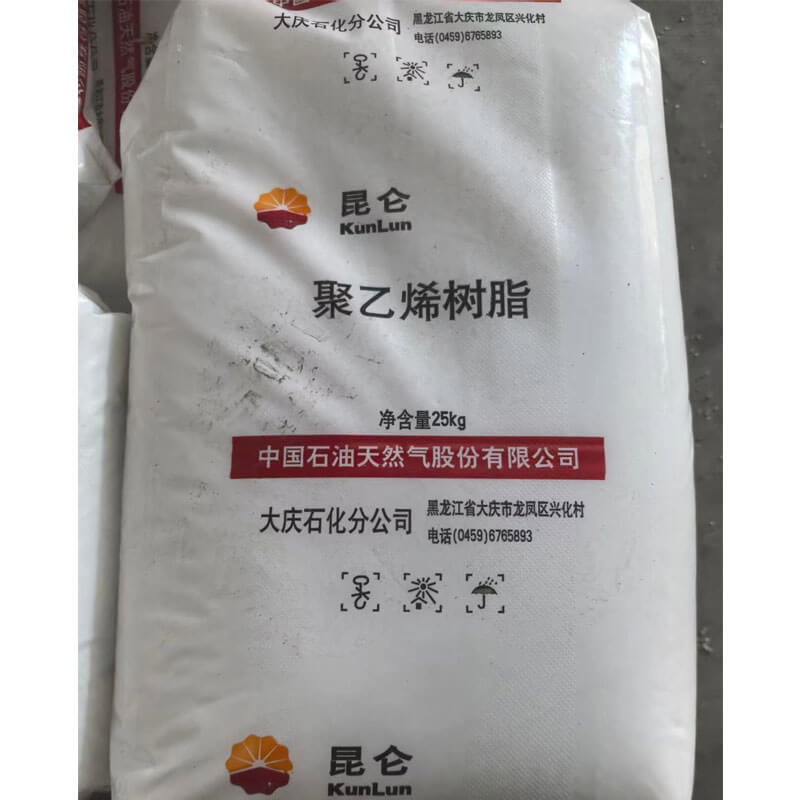
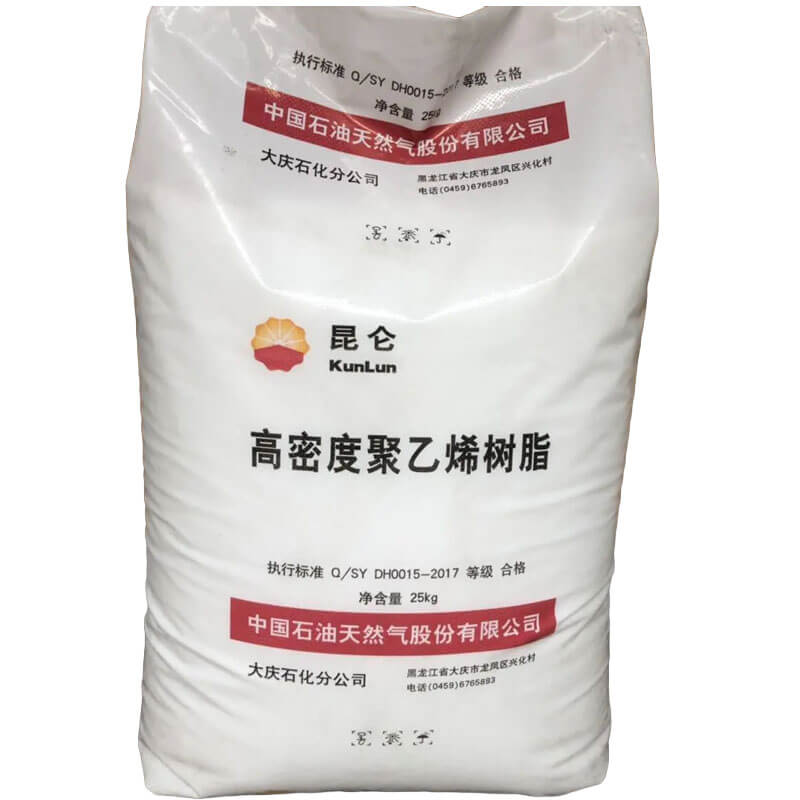
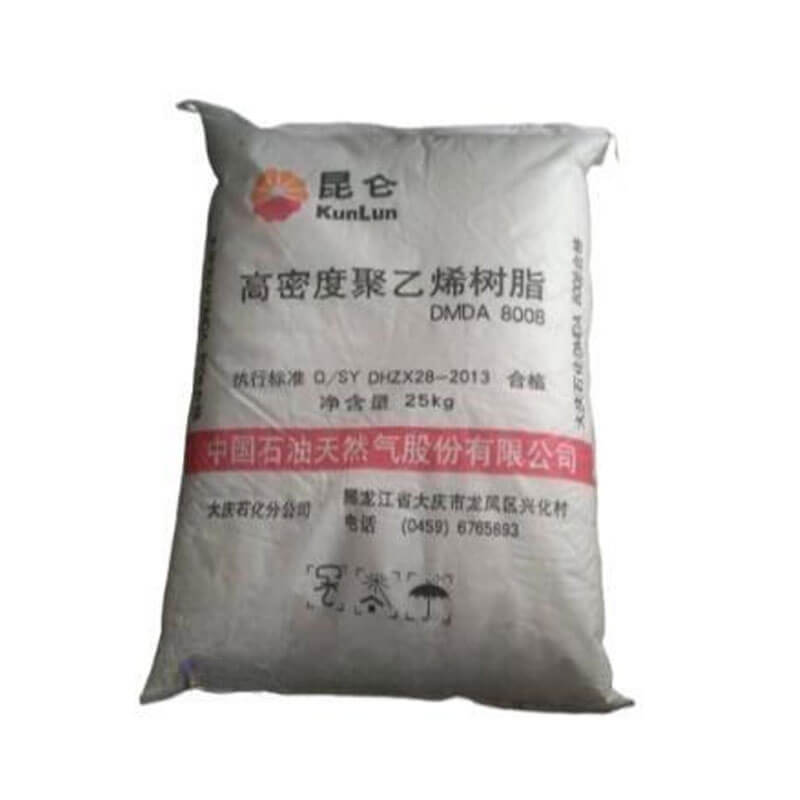
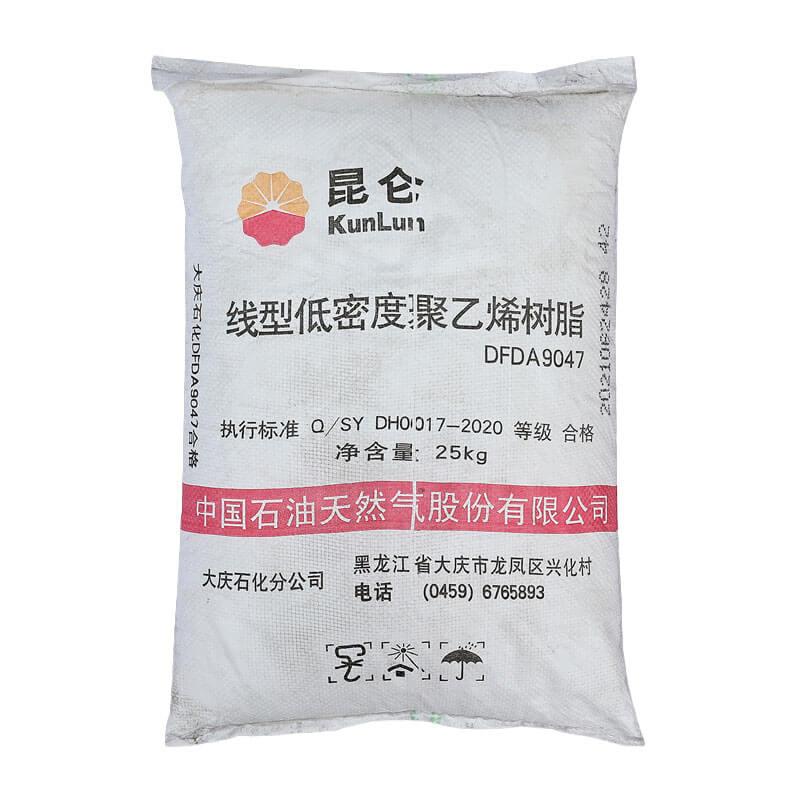
| Packing | HDPE DMDA 8008 resin is supplied in 25 kg net polyethylene-lined woven bags, palletized and shrink-wrapped for protection. |
| Container Loading (20′ FCL) | 20′ FCL container loading of HDPE DMDA 8008 resin in 25kg bags, safely palletized, protected from moisture. |
| Shipping | High-Density Polyethylene Resin (HDPE DMDA 8008) ships as non-hazardous pellets in moisture-proof bags, bulk bags, or hopper trucks. Keep dry, avoid direct sunlight and temperatures above 50°C. Ventilate storage areas. Use standard freight, rail, or container transport. Handle gently to prevent bag damage and contamination. |
| Storage | Store HDPE resin (DMDA 8008) in a cool, dry, well-ventilated area away from direct sunlight, heat sources, and ignition sources. Keep packaging sealed to prevent moisture and contamination. Avoid outdoor storage; use original bags or clean silos. Protect from mechanical damage and do not stack excessively. Stable under normal conditions; no special hazardous storage required. |
| Shelf Life | Shelf life of HDPE DMDA 8008 is practically indefinite under normal storage conditions: dry, cool, protected from sunlight and moisture. |
On accumulator-head extrusion blow moulding lines with 120 mm diameter barrier screws and 24:1 L/D barrels, DMDA 8008 is processed at melt temperatures between 180 °C and 220 °C. The nominal melt flow rate of 0.08 g/10 min under ISO 1133-1:2022 at 190 °C and 2.16 kg and density of 0.956 g/cm³ under ASTM D792-20 create a parison with sufficient melt strength to resist sag over accumulator shot volumes of 8 L to 12 L. Die gap settings are maintained between 2.0 mm and 4.0 mm. Divergent accumulator head tooling is used to control parison swell before mould closure. Blow air pressure is set at 0.6 MPa to 0.8 MPa. Mould cooling water is held to 8 °C to 15 °C to reduce post-mould shrinkage in thick-walled corner sections. Closed-loop regrind from tops, tails, and defective parisons is reintroduced at 20 wt% to 40 wt% when the regrind is from the same lot, screened to a particle size below 4 mm, and dried to a moisture content below 0.05 wt%. UN-certified 1H1 tight-head drums and 1H2 open-top pails based on this resin require drop testing at 1.2 m height for Packing Group II liquids having a relative density of 1.2 under 49 CFR §178.603, leakproofness under 49 CFR §178.604, and stack testing under 49 CFR §178.606 for 28 days at 40 °C. Terminal products include 200 L tight-head drums, 120 L open-top pails, and 60 L jerricans where the finished wall section is not less than 2 mm in the chime area. Published thermal stabiliser data for this specific grade is limited. Pre-drying is not normally required for virgin pellets stored below 60% RH, but regrind from humid plant environments should be dried before reintroduction.
Continuous shuttle and wheel blow moulding machines with 60 mm to 80 mm extruder screws are configured for DMDA 8008 when producing household chemical containers. Barrel temperatures are profiled from 160 °C at the feed throat to 200 °C at the die head. A 20-point parison programmer is required to redistribute wall thickness across the pinch-off and shoulder zones. The extrudate swell of a 0.08 g/10 min HDPE necessitates a smaller die gap than that used for lower-viscosity bottle grades. Typical die gap settings fall between 1.0 mm and 1.8 mm for a 250 mL to 5 L container. Colour masterbatch based on an LDPE carrier is metered at 2.0 wt% to 3.0 wt%. Loadings above 3.5 wt% reduce the bottle’s environmental stress crack resistance measured under ASTM D1693 condition B. UV stabiliser concentrate is let down at 0.2 wt% to 0.5 wt% only when the container is specified for outdoor storage of cleaning chemicals. Flash from handle pinch-offs and neck trim is compacted and reintroduced at 25 wt% to 35 wt%. The regrind fraction must be held constant to maintain neck finish dimensions. Containers intended for household chemical formulations are labelled under EC 1272/2008 and require the finished article to meet the barrier and compatibility limits of the filled product. Food-contact declarations are applied only when the specific lot is supported by a manufacturer statement under 21 CFR 177.1520. Terminal products include 500 mL, 1 L, and 5 L high-density polyethylene bottles for bleach, laundry additives, and hard-surface cleaners.
The limiting variable in agrochemical container production is not the virgin resin fracture resistance but the shift in environmental stress crack resistance after regrind is introduced. DMDA 8008 is evaluated under ASTM D1693 condition B, 100% Igepal CO-630, at 50 °C. When 20 wt% internal flash regrind is introduced, the ESCR retention is determined on the finished container because plaque F50 values do not capture weld-line stress at the pinch-off base. Published data for this specific configuration is limited. Pass/fail release requires bottle-weight and wall-thickness mapping rather than a single laboratory plaque value. Water-based suspension concentrates and emulsifiable concentrates are filled into 1 L, 5 L, and 20 L containers produced on shuttle blow moulders with 80 mm screws and 24:1 L/D ratios. The extruder is run at a back pressure of 5 MPa to 8 MPa to disperse masterbatch and homogenise regrind without generating excessive shear heating. Blow-mould pinch-off dies are maintained to a land length of 0.8 mm to 1.2 mm to reduce weld-line stress at the container base. Containers for agrochemical transport are qualified as 3H1 or 3H2 jerricans under 49 CFR §178.504 and ADR 6.1.5. Permeation of hydrocarbon-based solvents is tested under ASTM D2684. Terminal products include 1 L, 5 L, and 20 L monolayer agrochemical containers with tamper-evident neck finishes.
Six-layer coextrusion blow moulding for oxygen-sensitive solvents and waterborne industrial coatings uses DMDA 8008 in the inner and outer structural layers and in the regrind layer. The die head is fed by separate extruders. A 75 mm to 90 mm main extruder supplies the HDPE layers. A 30 mm to 40 mm extruder supplies EVOH. 25 mm to 35 mm extruders supply adhesive tie resins. Melt temperatures are held at 200 °C to 215 °C for DMDA 8008. EVOH is run at its supplier-specific melt-temperature window to prevent gel formation. The structural-layer proportion is maintained at 60 wt% to 70 wt% of the total wall. The regrind layer is held at 15 wt% to 25 wt%. Tie resin is maintained at 2.0 wt% to 3.0 wt%. EVOH is maintained at 3.0 wt% to 5.0 wt%. A layer-thickness scan across the bottle wall is performed with ultrasonic wall-thickness mapping after moulding. Oxygen transmission of the finished container is measured under ASTM D3985 at 23 °C and 0% RH for dry-wall comparison. Container qualification for solvent-based products requires the filled pack to pass UN drop and leakproofness tests under 49 CFR §178.603 and §178.604. Interlayer adhesion is evaluated with a peel test according to the tie resin supplier’s technical bulletin. No single ISO peel method covers all polymer combinations. Terminal products include 1 L to 20 L barrier containers for oxygen-sensitive solvents, water-based paints, and industrial floor coatings. DMDA 8008 is not suitable as the barrier layer itself. The EVOH layer thickness must be maintained above 1.5% of the total wall or oxygen transmission exceeds the target for solvent-based coatings.
For automotive washer reservoirs and industrial fluid ducts, three-dimensional suction blow moulding and sequential coextrusion are used to form DMDA 8008 parts. On a three-axis machine with an accumulator head and a 90 mm screw, the parison is laid into a moving mould to create complex geometries without pinch-off waste. Melt temperature is held at 190 °C to 210 °C. Blow air is introduced at 0.5 MPa to 0.7 MPa. Carbon black masterbatch is added at 2.0 wt% to 2.5 wt% for UV resistance in underhood exposure. Internal flash is minimal in three-dimensional moulding, so regrind content is limited to 10 wt% to 20 wt% from start-up purges. The finished part is marked according to ISO 11469 as PE-HD when service conditions permit. Accelerated heat ageing is evaluated under ISO 188 at service temperatures specified by the OEM. Cold-temperature impact after exposure to methanol-based washer fluid is tested under ASTM D256 at -40 °C. Published data for DMDA 8008 in methanol-based washer fluid at -40 °C is limited. Terminal products include 3 L to 8 L washer reservoirs, coolant expansion tanks, and industrial fluid ducts where continuous operating temperatures do not exceed the heat deflection temperature measured under ASTM D648 at 0.455 MPa.
Competitive High‑Density Polyethylene Resin HDPE (DMDA 8008) prices that fit your budget—flexible terms and customized quotes for every order.
For samples, pricing, or more information, please contact us at +8618018036652 or mail to sales6@ascent-chem.com.
We will respond to you as soon as possible.
Tel: +8618018036652
Email: sales6@ascent-chem.com
Flexible payment, competitive price, premium service - Inquire now!
High-density polyethylene resin HDPE DMDA 8008 is a copolymerised ethylene grade supplied as free-flowing pellets and intended primarily for extrusion blow moulding of rigid packaging. Supplier-published nominal data identify a density of 0.957 g/cm³ when tested under ISO 1183-1:2019 and a melt index of 0.80 g/10 min at 190 °C under a 2.16 kg load according to ISO 1133-1:2022. The density value above 0.955 g/cm³ classifies the material in the high-density polyethylene range, while the melt index below 1.0 g/10 min indicates molecular weight sufficient for parison stability during blow moulding but too high for thin-wall injection moulding. The grade is commonly stabilised with a phenolic/phosphite antioxidant system, and supplier documentation supports use in monolayer and multilayer blow-moulded containers where regrind is recovered under controlled ratios.
The following table consolidates representative values from supplier technical literature. These are not guaranteed specification limits, and lot-to-lot variation should be verified against the certificate of analysis.
| Property | Test method | Representative value |
|---|---|---|
| Density | ISO 1183-1:2019 / ASTM D1505-18 | 0.957 g/cm³ |
| Melt index, 190 °C / 2.16 kg | ISO 1133-1:2022 / ASTM D1238-20 | 0.80 g/10 min |
| Tensile stress at yield | ISO 527-2 / ASTM D638-14 | 27 MPa |
| Elongation at break | ISO 527-2 / ASTM D638-14 | 600% |
| Flexural modulus | ISO 178 / ASTM D790-17 | 1200 MPa |
| Vicat softening temperature, A50 | ISO 306 / ASTM D1525-17e1 | 128 °C |
| ESCR, F50, Condition B, 10% Igepal | ASTM D1693-15 | 100 h |
| Brittleness temperature | ASTM D746-20 | -60 °C |
The environmental stress crack resistance value must be interpreted as a comparative indicator, not a service-life guarantee. It is sensitive to moulding-induced stresses, regrind content, test temperature, and test fluid composition. The flexural modulus near 1200 MPa provides measurable top-load resistance in blow-moulded containers; however, final top-load performance is governed by panel design, wall thickness distribution, mould temperature, and orientation effects during the blowing phase.
Processing of DMDA 8008 on extrusion blow-moulding lines uses a general-purpose HDPE screw with a 20:1 to 24:1 L/D ratio, a compression ratio of 3.0:1 to 4.0:1, and a smooth barrel profile. A grooved feed throat is not mandatory for this grade but improves conveying stability at screw speeds above 60 rpm on 60 mm extruders. Feed-zone temperature is typically kept between 170 °C and 180 °C, transition-zone temperature between 190 °C and 200 °C, and head/die-zone temperature between 200 °C and 210 °C. Melt temperature measured at the die should not exceed 220 °C; above this threshold, thermal oxidative chain scission reduces parison melt strength and may generate die drool. Below 180 °C, excessive viscosity can cause melt fracture and high accumulator-head pressure. Blow-moulded part weight is controlled by parison length programming, and wall thickness variation across the pinch-off and chime areas should be monitored by ultrasonic gauges to maintain a minimum wall thickness of 0.8 mm for hazardous liquids packaging.
Regrind addition up to 20% for industrial containers is common; for food-contact containers, the use of returned material must meet the positive-list and migration requirements of FDA 21 CFR 177.1520(c) or EU Regulation (EU) No 10/2011. Pellets are hydrophobic, but surface condensation can occur when cold pellets are transferred into a warm processing hall. If pellet surface moisture exceeds 0.05 wt% or regrind is exposed to relative humidity above 60% RH, pre-drying at 80 °C for 2 h should be applied to prevent surface pitting and silver streaks. At a shear rate of 100 s⁻¹ and 190 °C, apparent shear viscosity for an HDPE with a melt index of 0.80 g/10 min is typically in the range of 800 Pa·s to 1200 Pa·s, compared with 200 Pa·s to 300 Pa·s for an injection-moulding HDPE at a melt index of 20 g/10 min. This viscosity gap accounts for the practical difference in parison hang time and die swell behaviour.
The primary difference is melt-flow distribution. An injection-moulding grade with a melt index of 20 g/10 min permits shorter cycle times and lower cavity pressure, but it exhibits low parison melt strength and limited environmental stress crack resistance. DMDA 8008, with a melt index of 0.80 g/10 min, provides a balance between flow and sag resistance suitable for blow moulding. A high-molecular-weight blow-moulding HDPE with a melt index of 0.30 g/10 min provides greater ESCR and melt strength but requires higher melt temperatures, higher head pressure, and longer cycle time, and is less suited to small containers with wall thicknesses below 2.0 mm.
| Characteristic | DMDA 8008 | General-purpose injection-moulding HDPE | High-molecular-weight blow-moulding HDPE |
|---|---|---|---|
| Melt index (190 °C / 2.16 kg) | 0.80 g/10 min | 20 g/10 min | 0.30 g/10 min |
| Density | 0.957 g/cm³ | 0.954 g/cm³ | 0.950 g/cm³ |
| Typical processing platform | Extrusion blow moulding | Injection moulding | Large-part blow moulding / sheet extrusion |
| Parison melt strength | High | Low | Very high |
| ESCR, ASTM D1693-15 | 100 h | less than 10 h | greater than 600 h |
| Typical wall thickness range | 0.8–2.0 mm | 1.0–3.0 mm | 2.0–10 mm |
The density difference also influences permeability and stiffness. The value of 0.957 g/cm³ for DMDA 8008 is higher than that of many film and pipe grades, producing greater modulus and lower permeation rate to aqueous liquids, but the material remains a semi-crystalline polyolefin and is not a barrier resin for oxygen or non-polar solvents. In aggressive chemical packaging, fluorination or a multilayer structure containing polyamide or EVOH is required when low oxygen transmission is specified.
At a die melt temperature below 180 °C, the elongational viscosity of DMDA 8008 increases sufficiently to produce parison curl, sharkskin melt fracture, and non-uniform wall thickness. On accumulator-head machines, this is observed as surface roughness on the parison outer skin and increased variation in container wall thickness from approximately ±0.15 mm to ±0.40 mm when measured at the pinch-off. Conversely, above 220 °C, parison sag becomes the limiting factor. Hang time is reduced, and the parison may thin below 0.6 mm before mould closure, especially for containers with a length-to-diameter ratio above 4:1. These processing boundaries are narrower than those for injection moulding, where melt temperatures up to 250 °C are routinely used. Published data for this specific configuration is limited, but production-scale experience indicates that a die-head temperature of 200 °C and a mould temperature between 15 °C and 25 °C provide stable part weight and acceptable surface finish. A blow-up ratio of 2:1 to 3:1 is typical, and die gap should be adjusted to maintain a land length sufficient for uniform flow distribution without excessive residence time.
The grade is used in rigid packaging where a balance of ESCR, top-load strength, and surface finish is required. Documented application areas include household and industrial chemical containers from 0.5 L to 5 L, agricultural chemical packages with UN-approved design, and cosmetic or pharmaceutical bottles where wall thickness is above 0.8 mm. In automotive fuel-tank applications, high-molecular-weight HDPE grades with higher melt strength and post-extrusion cross-linking are preferred; DMDA 8008 is not recommended for fuel-tank service because permeation resistance and long-term ESCR requirements exceed this grade’s design envelope. Published data for pharmaceutical packaging under USP <661> should be verified with the supplier for the specific lot and formulation.
Supplier documentation lists DMDA 8008 as suitable for food-contact use under FDA 21 CFR 177.1520(c), subject to conditions of use regarding temperature and food type. For the European market, compliance is assessed under EU Regulation (EU) No 10/2011, including overall migration testing according to EN 1186-1 and specific migration limits for any additives present. The resin is also subject to REACH Regulation (EC) No 1907/2006 registration requirements, and the supplier’s safety data sheet should be consulted for substances of very high concern content. RoHS compliance under Directive 2011/65/EU is typically demonstrated only at the finished homogeneous-material level and is dependent on colourants and processing aids; unpigmented natural resin generally contains no intentionally added heavy metals above the maximum concentration values.
DMDA 8008 should not be processed in equipment contaminated with polypropylene, polycarbonate, or acetal. Polypropylene reduces ESCR and causes delamination in blow-moulded walls; acetal and PVC decompose and release corrosive gases that attack tool steel. If colour is required, a polyethylene-based masterbatch at 2 wt% to 4 wt% letdown is preferred; high-liquid additives such as mineral oil can reduce parison melt strength and should be limited to levels below 0.5 wt%. Long-term outdoor weathering requires carbon black at 2.0–2.5 wt% or a hindered amine light stabiliser system; unstabilised natural resin is not formulated for continuous UV exposure. Storage should be in a dry, sealed vessel below 50 °C, and inventory should be consumed within 12 months of delivery when stored in original packaging to avoid oxidative shift in melt index.