| HS Code | 131826 |
| Density | 0.91–0.96 g/cm³ |
| Melting Point | 105–135°C |
| Tensile Strength | 10–40 MPa |
| Elongation At Break | 100–700% |
| Flexural Modulus | 200–1300 MPa |
| Hardness | 40–70 Shore D |
| Water Absorption | <0.01% over 24 hours |
| Chemical Resistance | Resistant to most acids, alkalis, and organic solvents |
| Electrical Insulation | Excellent dielectric properties |
| Uv Resistance | Poor unless stabilized with UV additives |
| Thermal Conductivity | 0.33–0.45 W/(m·K) |
| Melt Flow Index | 0.1–20 g/10 min depending on grade |
As an accredited Polyethylene Resin PE factory, we enforce strict quality protocols—every batch undergoes rigorous testing to ensure consistent efficacy and safety standards.
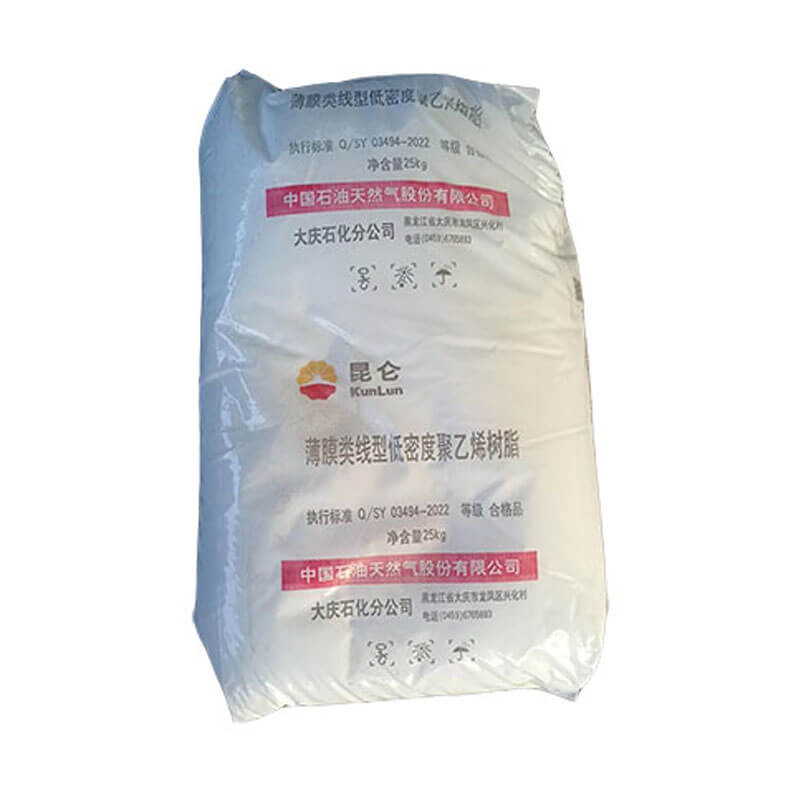
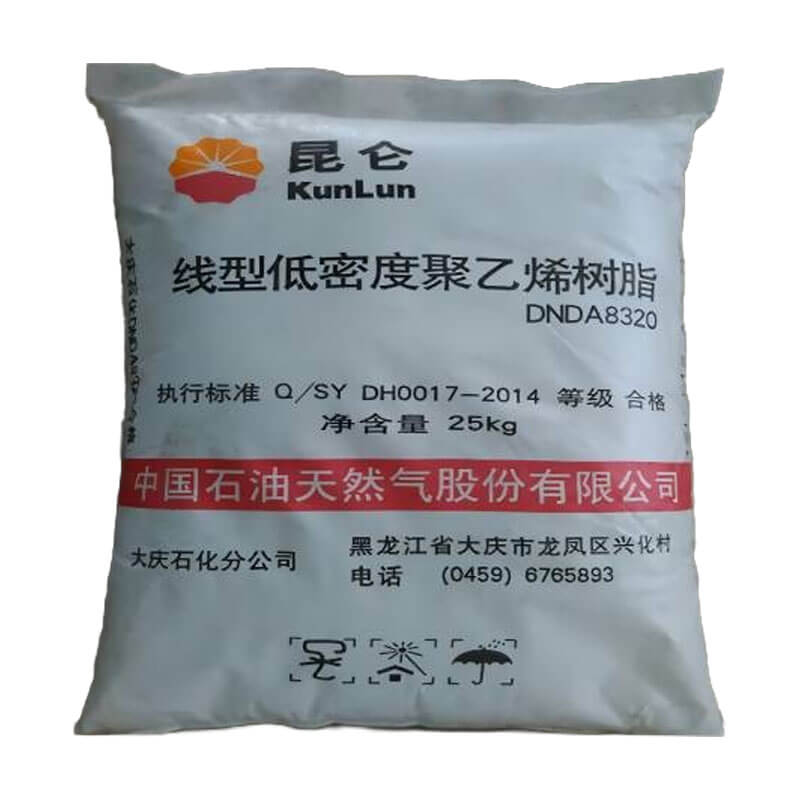
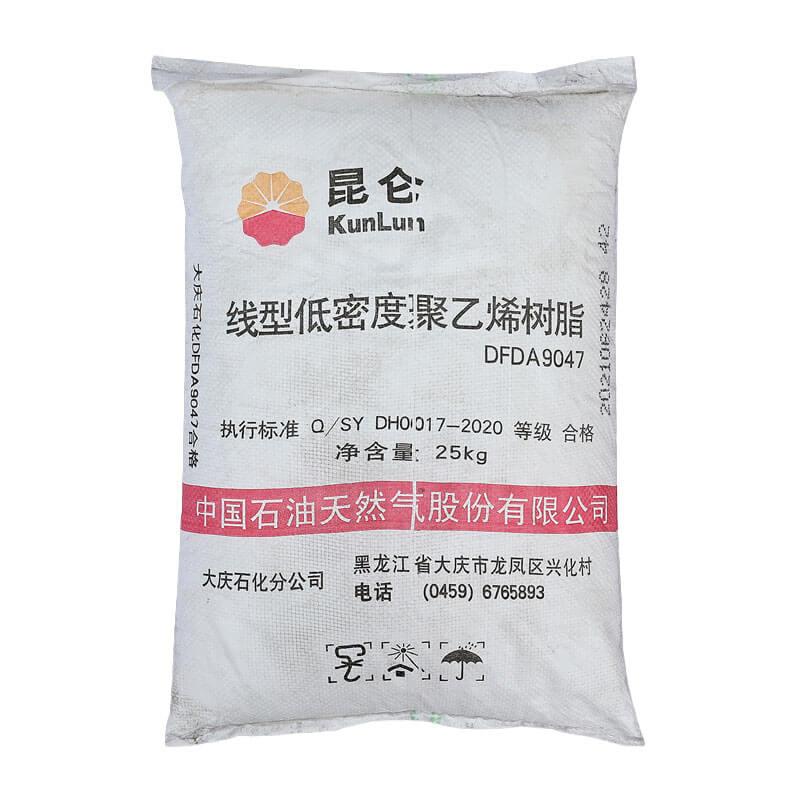
| Packing | Polyethylene Resin PE packaged in 25 kg sealed plastic-lined woven bags, palletized and wrapped for safe transport. |
| Container Loading (20′ FCL) | Polyethylene Resin PE is loaded into a 20-foot FCL container in sealed bags, properly secured for safe, efficient transport. |
| Shipping | Polyethylene Resin PE ships as non-hazardous solid pellets in 25 kg bags, bulk bags, or hopper trucks/railcars. Keep dry, ventilated, and away from heat, ignition sources, and oxidizers. Prevent dust accumulation; use enclosed handling systems. Not regulated as dangerous goods under standard transport conditions. |
| Storage | Store polyethylene resin in a cool, dry, well-ventilated area away from direct sunlight, heat, and ignition sources. Keep containers sealed to prevent moisture and contamination. Maintain moderate temperature; avoid high heat and static buildup. Separate from strong oxidizers. Ensure proper stacking and handling to prevent bag damage or dust accumulation. |
| Shelf Life | Shelf life for PE resin is about 2-3 years in cool, dry, dark storage, avoiding UV and humidity. |
Blown film lines running LDPE grades with melt flow index of 0.3 g/10 min to 2.0 g/10 min at 190°C/2.16 kg under ISO 1133-1:2022 typically use barrier screws with length-to-diameter ratio of 24:1 to 30:1 and die gaps of 0.8 mm to 2.0 mm. LLDPE-rich formulations are processed with wider die gaps of 1.5 mm to 2.5 mm because the higher shear viscosity of LLDPE at equivalent melt index generates excessive die pressure and sharkskin melt fracture at narrow gaps. Barrel zone profiles for LDPE frequently set feed throat temperature at 150°C to 170°C, compression zone at 180°C to 200°C, and metering zone at 200°C to 230°C. Blow-up ratio is held between 2.0:1 and 3.5:1; frost line height is set at 5 to 10 die diameters for LDPE-dominant film to control MD/TD tear balance. Bubble stability is compromised when frost line height is below 5 die diameters because the film remains molten too long, while frost line height above 10 die diameters raises MD orientation and reduces TD tear. Melt temperatures of 170°C to 230°C are used for LDPE, while LLDPE-rich blends require 190°C to 240°C to suppress melt fracture. Slip and antiblock masterbatches are incorporated at 1.0 wt% to 2.5 wt%; erucamide migrates over 24 h to 48 h to reduce coefficient of friction to 0.2 to 0.4, while synthetic silica antiblock with median particle size 3 µm to 7 µm prevents film blocking. Food-contact films require resin compliant with FDA 21 CFR 177.1520(c) and EU Regulation (EU) No 10/2011 with overall migration below 10 mg/dm². Optical haze is measured by ASTM D1003, gloss by ASTM D2457; LDPE-dominant films typically require haze below 8%, while LLDPE-rich films may be specified below 12%. Mechanical acceptance includes dart impact per ASTM D1709, Elmendorf tear per ASTM D1922, and tensile properties per ASTM D882. End products include heavy-duty shipping sacks, agricultural silage wrap, freezer film, over-wrap film, and transparent collation shrink film.
High-cavitation closure molds with 32, 48, or 64 cavities demand melt flow indices of 4 g/10 min to 30 g/10 min at 190°C/2.16 kg under ASTM D1238-20. Melt temperatures are set between 200°C and 260°C; mold wall temperatures are maintained at 10°C to 30°C. Injection pressures of 70 MPa to 110 MPa are common. The limiting defect is warpage caused by differential shrinkage between the outer sidewall and the central closure panel; semi-crystalline HDPE exhibits shrinkage of 1.5% to 3.0%. Gate freeze time, packing pressure decay, and cooling time interact with mold temperature asymmetry. Nucleating agents at 0.05 wt% to 0.25 wt% shorten cycle time by raising crystallization temperature, but excess nucleation lowers impact strength measured by ASTM D2463 and can reduce elongation at break under ISO 527-2. Closure resin requires compliance with FDA 21 CFR 177.1520(c) and EU Regulation (EU) No 10/2011 for food and pharmaceutical contact. Environmental stress crack resistance is measured by ASTM D1693 condition B in 100% Igepal CO-630 at 50°C; high-flow injection grades may show failure below 24 h, while medium-flow grades can exceed 100 h. Drop impact is assessed per ASTM D2463. Hot runner valve gate systems reduce gate vestige and improve cavity-to-cavity weight uniformity; cavity-to-cavity fill balance above 2% variation produces dimensional outliers. Mold coolant inlet temperature is typically 8°C to 15°C, with turbulent flow Reynolds number above 10,000 to maintain uniform mold wall temperature. Regrind addition above 20 wt% can reduce ESCR and increase gel formation. End products include beverage closures, pharmaceutical caps, cosmetic flip-top closures, and tamper-evident overcaps.
Rotational molding powder dry-flow values below 30 s/100 g under ASTM D1895 and bulk density above 0.35 g/cm³ are required for consistent wall thickness in complex mold cavities. PE rotomolding grades typically carry density of 0.934 g/cm³ to 0.945 g/cm³ and melt flow index of 3 g/10 min to 7 g/10 min at 190°C/2.16 kg. Particle size distribution is controlled with 35-mesh (500 µm) cuts; fines below 75 µm are minimized because they cause pinholes and poor venting. The mold rotates biaxially with speed ratios of 2:1 to 6:1. Oven temperatures are 280°C to 320°C; peak internal air temperature reaches 200°C to 240°C for complete fusion. The critical processing conflict is the balance between bubble removal and oxidative degradation; insufficient peak temperature leaves spherical voids, while peak temperature above 250°C accelerates oxidation and color shift. Cooling rate is controlled at 5°C/min to 15°C/min to avoid warpage and shrinkage. Crosslinked PE grades incorporate peroxide at 0.5 wt% to 1.5 wt%; peroxide decomposition requires internal air temperature above 180°C, and the resulting gel content exceeds 80% per ASTM D2765. Venting tubes at mold parting lines maintain internal air pressure of 10 kPa to 20 kPa during heating to prevent gas porosity. Potable water tanks require NSF/ANSI 61; upright chemical storage tanks are produced under ASTM D1998. End products include agricultural sprayer tanks, fuel cells, kayaks, playground components, and double-wall insulated containers.
In PE100 pipe extrusion, the hydrostatic design basis at 20°C for 50 years is 10 MPa per ISO 9080; PE4710 resin under ASTM D3350 typically carries cell classification 445574C. Resin density is 0.945 g/cm³ to 0.965 g/cm³, and melt flow index is 0.20 g/10 min to 0.70 g/10 min at 190°C/5 kg under ISO 1133-1:2022. Single-screw extruders with L/D 30:1 to 36:1 and barrier screws are used; melt temperature is maintained at 200°C to 230°C. Head pressure before the screen pack is typically 25 MPa to 40 MPa, and screen pack configurations commonly use 60/80/100 mesh layers to trap contaminants. For pipes above 315 mm outside diameter, sag is controlled by internal air cooling, vacuum calibration, and melt pump synchronization. Vacuum calibration tanks operate at negative pressure of -0.02 MPa to -0.04 MPa. The processing conflict occurs at wall thickness above 30 mm: extended cooling time induces crystallinity gradients; incorrect cooling rate reduces slow crack growth resistance measured by ISO 13479 notched pipe test. Carbon black masterbatch is added to yield 2.0 wt% to 2.5 wt% carbon black in the final compound; dispersion is checked under ISO 18553 with maximum un-dispersed agglomerate size of 70 µm. Oxidative induction time at 200°C under ASTM D3895 is specified above 20 min. Pressure design stress for PE100 is 8.0 MPa at 20°C. Potable water pipe requires NSF/ANSI 61, EN 12201, and ISO 4427. End products include municipal water mains, gas distribution pipes, industrial slurry lines, and geothermal loops.
| Property | Method | Typical requirement |
|---|---|---|
| Density | ISO 1183-1 | 0.945–0.965 g/cm³ |
| Melt flow index, 190°C/5 kg | ISO 1133-1:2022 | 0.20–0.70 g/10 min |
| Tensile yield stress | ISO 527-2 | 23–27 MPa |
| Elongation at break | ISO 527-2 | >600% |
| ESCR, 100% Igepal, 50°C | ASTM D1693 B | >1,000 h |
| Oxidative induction time, 200°C | ASTM D3895 | >20 min |
| Carbon black content | ISO 6964 | 2.0–2.5 wt% |
Extrusion coating at line speeds above 300 m/min on paperboard or flexible film uses LDPE resin with melt flow index of 4 g/10 min to 15 g/10 min at 190°C/2.16 kg and density of 0.915 g/cm³ to 0.925 g/cm³. Melt temperature at the die is 280°C to 330°C. The key process conflict is draw resonance and neck-in; high melt strength grades or LDPE blending into LLDPE reduce neck-in below 5 cm at 200 m/min, while narrow die gap improves coating weight uniformity. Adhesion to paperboard is measured by peel strength under ASTM D903 after heat sealing at 120°C to 180°C; polyethylene coating weights of 12 g/m² to 30 g/m² are typical. Corona treatment at 40 dyn/cm to 50 dyn/cm is applied immediately before the nip to raise paperboard surface energy. For aseptic liquid packaging, the PE coating must comply with FDA 21 CFR 177.1520(c) and EU Regulation (EU) No 10/2011. Oxygen transmission is not controlled by the PE layer; barrier performance is supplied by aluminum foil or EVOH in coextruded structures. End products include aseptic cartons, paper cups, sachet laminates, and release liners.
Wire jacketing compounds based on HDPE/LLDPE require carbon black dispersion to maintain weathering resistance and avoid premature dielectric breakdown. The base resin is MDPE or HDPE with density 0.930 g/cm³ to 0.955 g/cm³ and melt flow index of 0.2 g/10 min to 1.5 g/10 min at 190°C/2.16 kg. Carbon black masterbatch is added to reach 2.5 wt% to 3.0 wt% final carbon black content, with aggregate size below 100 nm for UV protection. Dispersion is assessed by ISO 18553; undispersed agglomerates above 70 µm are rejected. Extrusion on a 24:1 to 30:1 L/D single-screw jacketing line uses melt temperature of 200°C to 240°C. Screen packs of 40/60/80 mesh are commonly installed before the breaker plate to remove carbon black agglomerates and crosslinked gels. The critical degradation threshold is oxidative induction time at 200°C under ASTM D3895; cable insulation specifications commonly require a value above 30 min. Antioxidant packages combine hindered phenol primary antioxidant with phosphite secondary antioxidant at total loading of 0.10 wt% to 0.30 wt%. For low-voltage cable insulation, dielectric strength per ASTM D149 is specified above 20 kV/mm. Resin classification for wire and cable may follow ASTM D1248. Compliance for global cable markets includes REACH and RoHS restrictions on lead, cadmium, and phthalates. End products include primary insulation for telephone singles, coaxial cable jackets, and conduit sheathing.
In HDPE blow molding of containers, parison sag and die swell control determine wall thickness distribution and drop impact. Extrusion blow molding grades carry melt flow index of 0.2 g/10 min to 1.0 g/10 min at 190°C/2.16 kg and density 0.945 g/cm³ to 0.955 g/cm³. Melt temperature is 180°C to 220°C; die swell is typically 20% to 40%. Parison programming adjusts die gap from 1.5 mm to 5.0 mm to compensate for sag. Accumulator head shot capacity is typically 1.5 kg to 5 kg, with parison wall thickness programming points between 32 and 64. Mold temperature is kept at 10°C to 30°C. Blow pressure ranges from 0.4 MPa to 0.8 MPa. The limiting defect in large containers is environmental stress crack failure at pinch-off seams and handle areas; ESCR under ASTM D1693 condition A or B is specified above 100 h for detergent bottles. Drop impact at -20°C per ASTM D2463 is used for dairy and industrial chemical containers. Resin for food packaging must meet FDA 21 CFR 177.1520(c) and EU Regulation (EU) No 10/2011. End products include shampoo bottles, detergent containers, automotive fuel tanks with barrier treatment, and pharmaceutical narrow-neck bottles.
Geomembrane fabrication from HDPE requires resin with density 0.940 g/cm³ to 0.955 g/cm³ and melt flow index of 0.2 g/10 min to 1.0 g/10 min at 190°C/2.16 kg. Sheet extrusion or calendering produces thickness from 1.0 mm to 3.0 mm, with textured surfaces formed by nitrogen gas injection or embossing. The stress crack resistance requirement is severe; notched constant tensile load testing under ASTM F2136 typically requires failure time above 400 h at 30% of yield stress in 10% Igepal solution at 50°C. Carbon black content is 2.0 wt% to 2.5 wt%; dispersion is regulated under ISO 18553. Field welding uses hot-wedge welding at 220°C to 260°C and extrusion fillet welding with melt temperature 220°C to 280°C. Weld strength is verified by peel and shear tests following ASTM D6392; strength at yield is tested per ISO 527-3. Chemical compatibility is assessed under EPA 9090 or ASTM D5747 for landfill leachate. End products include landfill liners, mining heap leach pads, pond liners, and containment barriers.
Competitive Polyethylene Resin PE prices that fit your budget—flexible terms and customized quotes for every order.
For samples, pricing, or more information, please contact us at +8618018036652 or mail to sales6@ascent-chem.com.
We will respond to you as soon as possible.
Tel: +8618018036652
Email: sales6@ascent-chem.com
Flexible payment, competitive price, premium service - Inquire now!
Polyethylene resin (PE) is a semi-crystalline thermoplastic polymerised from ethylene and specified commercially by density, melt mass-flow rate (MFR), short-chain branching, molecular weight distribution, and additive package. The ISO 1872-1:2018 designation system classifies PE grades by density and melt mass-flow rate; for example, a film-grade LDPE with density 0.923 g/cm³ measured per ISO 1183-1:2019 and MFR 1.9 g/10 min at 190°C/2.16 kg measured per ISO 1133-1:2022 is identified by the density-MFR code rather than by resin family name alone. ASTM D4976-20 provides a cell classification for PE plastics that assigns digits for density, melt flow, flexural modulus, and environmental stress-crack resistance. The density range of commercial PE resin spans 0.910 g/cm³ to 0.970 g/cm³; MFR at 190°C/2.16 kg ranges from 0.10 g/10 min for high-molecular-weight pipe and blow moulding grades to 65 g/10 min for thin-wall injection moulding and masterbatch carriers. The four primary sub-classes—LDPE, LLDPE, MDPE, and HDPE—differ in short-chain branch content and crystallinity; LDPE typically has long-chain branching and crystallinity 45–55%, while HDPE has minimal branching and crystallinity 60–80%.
| Property | LDPE | LLDPE | MDPE | HDPE | Test method |
|---|---|---|---|---|---|
| Density | 0.910–0.925 g/cm³ | 0.915–0.940 g/cm³ | 0.926–0.940 g/cm³ | 0.941–0.970 g/cm³ | ISO 1183-1 |
| MFR at 190°C/2.16 kg | 0.2–65 g/10 min | 0.5–50 g/10 min | 0.1–20 g/10 min | 0.05–60 g/10 min | ISO 1133-1 |
| Crystallinity | 45–55% | 35–60% | 50–65% | 60–80% | ISO 11357-3 |
| Tensile yield | 8–12 MPa | 10–25 MPa | 15–25 MPa | 22–35 MPa | ISO 527-2 |
| Flexural modulus | 100–300 MPa | 200–600 MPa | 400–800 MPa | 900–1600 MPa | ISO 178 |
Film-grade LLDPE with an octene comonomer and density 0.918 g/cm³ is frequently selected over LDPE for puncture resistance and downgauging. On a 90 mm single-screw extruder with a grooved barrel and L/D 30:1, an annular die of 250 mm, and a dual-lip air ring operating at a blow-up ratio of 2.5:1, C8-LLDPE increases melt pressure and motor load compared with LDPE at the same screw speed. At a screw speed of 80 rpm, the LLDPE condition may require 15–20% higher motor torque than LDPE at equal output, and melt temperature measured at the die typically increases by 5–10°C due to viscous heating. The die gap for LLDPE is typically widened from 0.8 mm to 1.6–2.0 mm because the narrower die gap produces melt fracture and shark-skin surface defects at shear stresses above approximately 0.4 MPa. Dart impact values measured per ASTM D1709-22 Method A for 25 µm blown film typically rise from 90 g for LDPE to 300 g or higher for C8-LLDPE, while haze measured per ASTM D1003-13 may remain below 5% for a well-formulated LDPE but above 10% for a standard C8-LLDPE unless the die gap, frost line height, and bubble stability are adjusted. The difference arises from linear chain architecture: LLDPE has no long-chain branching, producing higher extensional viscosity and more stable bubble formation at high take-off speed but inferior melt strength for very high blow-up ratios.
For pipe extrusion of bimodal HDPE PE 100, the material specification is controlled by long-term hydrostatic strength rather than melt flow alone. ISO 9080:2012 and ISO 12162-1:2017 classify PE 100 as having a minimum required strength of 10 MPa at 20°C for 50 years under internal water pressure. Bimodal HDPE achieves the required slow crack growth resistance by combining a high-molecular-weight fraction with a lower-molecular-weight fraction; the MFR5 at 190°C/5 kg is often 0.23 g/10 min, while the density is 0.959 g/cm³. On a 75 mm grooved-barrel extruder with L/D 36:1 and a spiral mandrel die of 250 mm, melt temperature is maintained between 190°C and 230°C; overheating above 260°C initiates oxidative degradation and reduces the oxidative induction time measured by ISO 11357-6. Vacuum calibration and downstream cooling are used to control residual stress. A screen pack of 400/200/400 µm or finer is used to trap gel bodies; pressure rise across the screen above 12 MPa indicates gel accumulation and requires screen replacement. The typical throughput on this configuration is 350–450 kg/h. Melt pressure fluctuations above 3 MPa can produce periodic wall thickness variation and are corrected by stabilising screw speed and die temperature zones.
In extrusion blow moulding of HDPE containers, a high-molecular-weight HDPE with density 0.954 g/cm³ and MFR 0.3–0.7 g/10 min at 190°C/2.16 kg is selected to provide parison swell and sag resistance. On a continuous shuttle blow moulding line with a 70 mm grooved-barrel extruder and L/D 30:1, the parison die gap is set to 2.0–4.0 mm depending on bottle weight. The extruder temperature profile is held at 170–210°C; low melt temperature improves sag resistance but increases melt fracture. Parison swell is controlled by the weight and length program; variations in melt temperature above ±3°C produce wall thickness deviations in the bottle shoulder and base. Drop impact strength of the finished container is tested by ASTM D2463 or ISTA 6A; a 1 L HDPE bottle with wall thickness 0.6 mm typically withstands 1.2 m drop at -20°C when the resin has adequate ESCR. Environmental stress-crack resistance is critical for containers holding detergents or alcohols; a grade with ESCR above 100 h per ASTM D1693-15 Condition A is often specified, whereas low-molecular-weight injection grades may fail below 10 h.
Rotational moulding grades of PE are usually MDPE or LLDPE with MFR 5.5 g/10 min at 190°C/2.16 kg and density 0.935 g/cm³. The polymer powder is specified by dry flow rate and particle size distribution through a 35-mesh screen; ASTM D1895 Method A dry flow and bulk density are monitored because segregation produces uneven wall thickness. During moulding, the biaxial rotational equipment heats the mould cavity to a peak internal air temperature of 200–210°C; cycle times for 8 mm wall tanks are commonly 18–24 min. At temperatures below 190°C, sintering is incomplete and pin-holes form; above 240°C, the resin oxidises and the part develops yellowing and embrittlement. Cooling rate is controlled by forced air and water mist; rapid cooling from 200°C to 90°C at 10°C/min reduces shrinkage but can induce warpage in flat panels. Low-temperature impact is verified by the ARM impact test per ASTM D2444 or ISO 16420; a grade with ESCR above 1000 h per ASTM D1693-15 Condition B is used for chemical tanks. For outdoor service, UV stabilisation is supplied by carbon black 2–3 wt% or by hindered amine light stabilisers at 0.1–0.3 wt%, because unmodified PE loses tensile elongation after 1000 h of QUV exposure per ASTM D4329.
Because injection moulding of thin-wall closures and caps demands high-flow grades, HDPE with MFR 20–60 g/10 min at 190°C/2.16 kg and density 0.952–0.960 g/cm³ is processed on hydraulic injection moulding machines with clamp forces of 1200–2500 kN and multicavity hot-runner tools. The spiral flow length of such grades at 220°C and 70 MPa injection pressure typically exceeds 500 mm; this permits wall thicknesses below 1.0 mm without short shots. Mould shrinkage measured per ISO 294-4 is 1.5–3.0% in the flow direction and 0.5–1.5% perpendicular to flow, so gate location and cooling design must be adjusted to prevent ovality. Typical cycle time for a 0.8 mm cap with hot runners is 5–8 s; cooling time is the dominant component. Clamp force is calculated from projected area and cavity pressure, with 3.5 kN/cm² used as a design threshold; premature mould flash occurs when cavity pressure exceeds the clamp limit. HDPE closure grades have higher stress-crack resistance than LDPE but lower clarity; clarified random copolymers of polypropylene are preferred when transparency and higher top-load are required, but PP has higher melt temperature and lower environmental stress-crack resistance.
PE resins are supplied with regulatory clearances that are specific to the resin family, additive package, and end-use. A compliance matrix is used to confirm that the selected grade meets the required conditions of use.
| Application | Standard or regulation | Test method or clause | Typical acceptance criterion |
|---|---|---|---|
| Food contact | FDA 21 CFR 177.1520 | Olefin polymer requirements | Density, extractables per conditions of use |
| EU food contact | EU Regulation 10/2011 | Overall migration per EN 1186-1 | 10 mg/dm² |
| Potable water pipe | ISO 9080:2012 / ISO 12162-1:2017 | MRS classification | 10 MPa for PE 100 |
| Electrical insulation | IEC 60811 series | Oxidation induction time | >20 min at 200°C aluminium pan |
| Recyclate content | REACH 1907/2006, Annex XVII | SVHC screening | No SVHC above threshold |
| Heavy metals | RoHS 2011/65/EU | XRF screening per IEC 62321 | Pb, Cd, Hg, Cr6+ 1000 ppm |
For extrusion coating of paperboard and flexible packaging, LDPE coating grades with MFR 4–8 g/10 min and density 0.915–0.920 g/cm³ are processed at melt temperatures between 300°C and 330°C. On a coextrusion coating line with a 120 mm single-screw extruder and a coat-hanger die, the air gap between die exit and chill roll is held at 150–250 mm; smaller air gaps reduce neck-in and improve adhesion to paperboard but increase coating weight variation. Chill roll temperature is maintained at 15–20°C to quench the coating and control crystallinity; matte finishes require higher chill roll temperature or embossing. The melt draw reduces the web to 12–25 µm coating thickness at line speeds of 200–350 m/min. Adhesion to paperboard is assessed as fibre tear percentage per TAPPI T 494 or ASTM F904; a fully integrated LDPE coating typically achieves fibre tear above 90%. Oxidative stability is checked by melt-extrudate odour and hexane extractables per FDA 21 CFR 177.1520 if the structure is intended for direct food contact. The operational boundary is melt temperature: below 290°C, film splitting and poor adhesion occur; above 340°C, gel formation and gel defects increase sharply.
Unmodified PE is not selected where oxygen barrier below 100 cm³·100 µm/(m²·day·atm) is required; monolayer HDPE typically has oxygen transmission rates above 1000 cm³·100 µm/(m²·day·atm) at 23°C/0% RH measured per ASTM D3985-17, while PET is often two orders of magnitude lower. PE also has lower clarity than amorphous PET and lower modulus than PP. Unlike PVC, PE does not require metal soap stabilisers and does not release hydrogen chloride during processing. PP homopolymer has a flexural modulus typically 1300–1800 MPa versus 900–1600 MPa for HDPE, both measured per ISO 178, but HDPE retains impact at -40°C more reliably and has better environmental stress-crack resistance than PP. For flexible packaging, the choice between LDPE and LLDPE is governed by dart impact, haze, and melt strength; for rigid packaging, the choice between HDPE and PP is governed by stiffness, heat resistance, hinge fatigue, and moisture vapour transmission. PE remains the preferred resin when low-temperature ductility, moisture vapour barrier, and cost per unit volume dominate, while PP, PET, and PVC are selected when higher modulus, clarity, or oxygen barrier are non-negotiable.
In wire and cable insulation, LLDPE or HDPE jackets are specified by oxidation induction time, volume resistivity, and space factor. A medium-density PE cable jacket with density 0.935 g/cm³ and MFR 0.5–2.0 g/10 min is extruded on a 60 mm single-screw extruder with L/D 25:1 at melt temperature 180–210°C. The volume resistivity of PE insulation exceeds 10¹⁵ Ω·m per IEC 60093, but the material is incompatible with high-temperature service above 90°C; crosslinked PE is required for service above 90°C to prevent conductor deformation and creep. Carbon black 2.5 wt% is incorporated for UV weathering and is controlled by particle size and dispersion, because agglomerates above 20 µm create electrical stress concentrations that lead to premature insulation failure in high-voltage cable.