Acrylonitrile‑Butadiene‑Styrene Resin ABS‑750A

    • Product Name: Acrylonitrile‑Butadiene‑Styrene Resin ABS‑750A
    • Factroy Site: Xinghua Village, Longfeng District, Daqing City, Heilongjiang Province
    • Price Inquiry: sales6@ascent-chem.com
    • Manufacturer: PetroChina Daqing Petrochemical Company
    • CONTACT NOW
    Specifications
    HS Code 264093
    Specific Gravity 1.05
    Melt Flow Rate 17 g/10min (220°C, 10kg)
    Tensile Strength At Yield 43 MPa
    Elongation At Break 20%
    Flexural Strength 65 MPa
    Flexural Modulus 2300 MPa
    Izod Impact Strength Notched 23c 220 J/m
    Heat Deflection Temperature 1 80mpa 80 °C
    Vicat Softening Temperature 92 °C
    Rockwell Hardness R-112
    Mold Shrinkage 0.4 - 0.6%
    Drying Temperature 80 - 90 °C

    As an accredited Acrylonitrile‑Butadiene‑Styrene Resin ABS‑750A factory, we enforce strict quality protocols—every batch undergoes rigorous testing to ensure consistent efficacy and safety standards.

    Packing & Storage
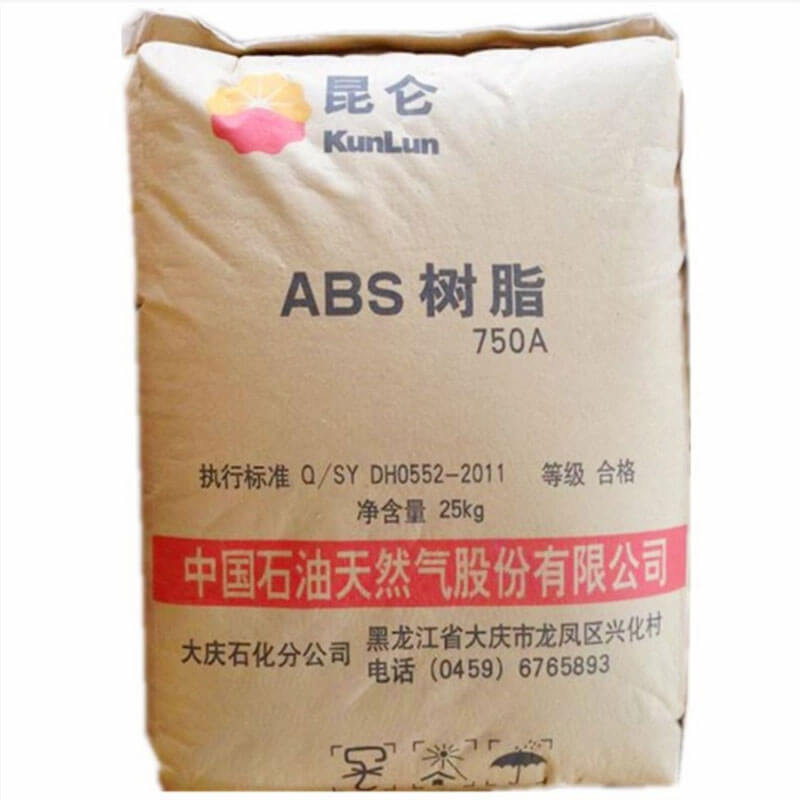
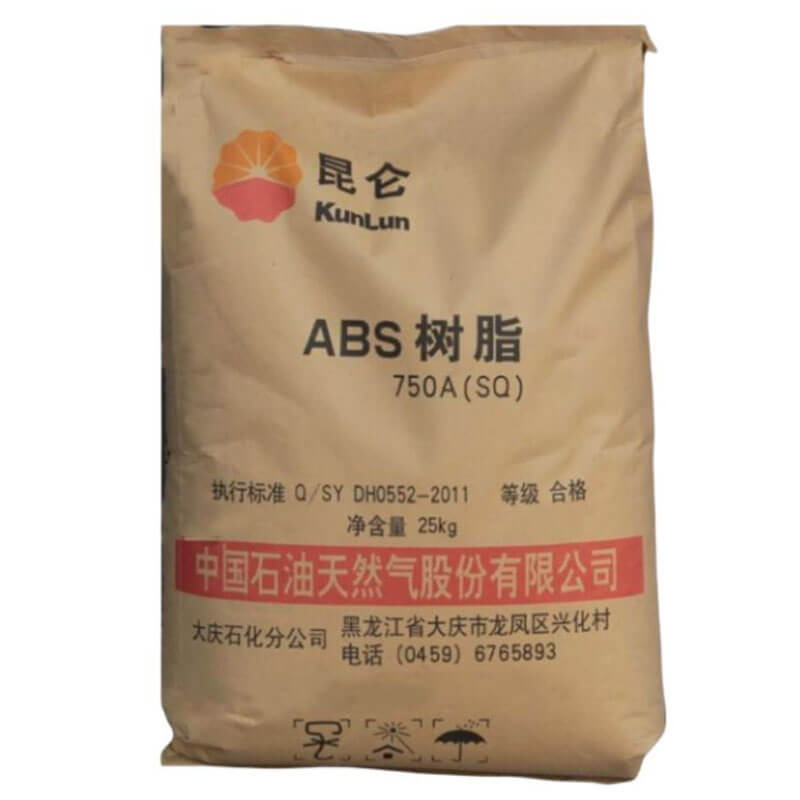
    Packing Acrylonitrile-Butadiene-Styrene Resin ABS-750A is supplied in 25 kg sealed polyethylene-lined kraft bags, palletized and protected from moisture.
    Container Loading (20′ FCL) 20′ FCL container loading of Acrylonitrile-Butadiene-Styrene Resin ABS-750A, packed in 25kg bags on pallets, securely stowed.
    Shipping Acrylonitrile-Butadiene-Styrene Resin ABS-750A is a non-hazardous plastic material, typically shipped in moisture-proof lined bags, cartons, or bulk containers. Keep packaging sealed, store in a cool, dry area away from direct sunlight and heat sources. No special transport restrictions apply for standard road, sea, or rail freight when properly packed.
    Storage Store ABS-750A resin in a cool, dry, well-ventilated area away from direct sunlight, heat sources, and open flames. Keep containers tightly sealed to prevent moisture pickup and contamination. Avoid dust accumulation; use grounded equipment to prevent static discharge. Maintain temperatures below 40°C and separate from oxidizing agents. Ensure good housekeeping and proper labeling.
    Shelf Life Store in original sealed packaging, in a cool, dry place away from sunlight. Shelf life is typically 2 years from manufacture date.
    Application of Acrylonitrile‑Butadiene‑Styrene Resin ABS‑750A

    Injection Moulding of Air Distribution Components for Passenger Vehicle Interiors

    ABS-750A is introduced into automotive air management components as a medium-flow injection moulding substrate in which melt temperature, moisture, and regrind fraction govern surface quality and snap-fit retention. Pellets are dried in desiccant dryers at 80–85°C for 3–4 h until residual moisture determined under ISO 15512:2019 remains below 0.02 wt%; splay and silver streaks appear when moist pellets enter barrel zones above 220°C. The formulation consists of 100 parts by weight ABS-750A, 1.5–2.0 wt% TiO2-containing colour masterbatch, 0.3–0.6 wt% carbon black masterbatch for grey shade control, and 0.2–0.5 wt% hindered amine UV stabiliser masterbatch. Process regrind is limited to 10 wt% on visible Class A surfaces and may reach 20 wt% in hidden duct sections only after notched Charpy impact under ISO 180/1A retains at least 80% of the virgin value. Injection moulding is performed on 650–1,200 kN clamp-force machines with barrel zones from 220°C to 250°C, mould temperature held at 50–70°C, and injection velocity profiled from 30 mm/s at the gate to 60 mm/s during cavity filling. Cavity pressure transducers are used to balance hot-runner manifolds; a pressure deviation above 5% across cavities indicates a blocked nozzle or gate freeze. Wall thickness transitions are maintained between 1.8 mm and 3.2 mm, and rib-to-nominal wall ratio remains below 0.6 to avoid sink marks at bosses and snap-fit tabs. Linear mould shrinkage is compensated using ISO 294-4:2018 values of 0.5–0.9% in the flow direction and 0.4–0.8% transverse to flow. Compliance requires ISO 3795:1989 with burn rate below 100 mm/min, FMVSS 302, and where specified VDA 275 odour and VDA 277 VOC limits. Terminal components include defroster nozzles, centre console side panels, floor vent housings, and air distribution plenums whose operating temperature does not exceed the Vicat B50 value reported under ISO 306:2022.

    Double-insulated power tool housings produced from ABS-750A are characterised by a requirement for drop impact resistance at 1 m onto concrete and sufficient stiffness to prevent bearing pocket distortion. The compound comprises 100 parts by weight ABS-750A, 1.0–2.0 wt% colour masterbatch, and 0.2–0.5 wt% ethylene bis-stearamide-based internal lubricant masterbatch to promote ejection from deep rib sections. Compliance is evaluated under EN 60745-1:2009 for mechanical strength and heating; non-live external housings are moulded at 2.0–3.0 mm nominal wall thickness to avoid cracking at screw bosses. Processing uses injection machines with 25–30 mm barrier screws, barrel temperatures of 210–240°C, and mould temperature at 45–65°C; low mould temperature produces visible flow lines near cooling vent core holes. Clamp force is calculated at 2.5–3.5 kN/cm2 of projected cavity area, and hold pressure is set between 30 MPa and 50 MPa. When wall thickness falls below 1.8 mm, the melt flow front freezes before complete packing, producing microvoids around threaded inserts and snap-fit bosses; in that condition, shot weight variation on a 16-cavity hot-runner tool exceeds 0.15% and assembly rejection increases. Continuous service temperature is limited to 60–80°C, and the material is not placed in direct contact with commutator or gearbox surfaces above that threshold. Terminal parts include orbital sander bodies, cordless screwdriver housings, and heat gun rear covers.

    What Limits Flame-Retardant Masterbatch Loading in Power Adapter Housings?

    Flame-retardant ABS-750A compounds for power adapter enclosures are formulated to satisfy IEC 62368-1 fire enclosure requirements and UL 94 V-0 at 1.6 mm end-use thickness without losing melt stability in thin-wall injection moulding. The base compound uses 100 parts by weight ABS-750A, 14–18 wt% brominated epoxy FR masterbatch, 4–6 wt% antimony trioxide masterbatch, and 1.0–2.0 wt% colour masterbatch; actual loading is adjusted only after cone calorimeter screening of the final pigmented formulation. Compounding is performed on a 30–40 mm co-rotating twin-screw extruder with L/D 40:1, barrel zones 180–210°C, screw speed 250–400 rpm, and vacuum devolatilisation at −0.09 MPa. The upper loading boundary is controlled by plate-out on the die face and strand breakage; exceeding 20 wt% total FR masterbatch reduces notched Charpy impact below 8 kJ/m2 under ISO 180/1A. Injection moulding uses 200–230°C melt temperature, 50–70°C mould temperature, and hold pressure profiles limited to 40–60 MPa to prevent gate blush at 1.2–1.8 mm wall stocks. Terminal products include 5 V and 12 V power adapter housings, router bottom shells, and set-top box enclosures.

    Indicative screening data for ABS-750A flame-retardant masterbatch gradient
    Total FR masterbatch loading (wt%)UL 94 classification at 1.6 mmNotched Charpy retention (%)Extrusion observation
    0HB100No die deposit
    8–10V-275–85Slight die lip deposit after 8 h
    12–14V-160–75Increased melt viscosity
    16–18V-050–65Die face accumulation
    >20V-0 with delamination risk<50Plate-out and strand breakage

    Published data for this specific configuration is limited; the above ranges are screening-level observations from compounding trials and must be revalidated on production-scale equipment before locked specifications are released.

    Under EN 71-1:2014+A1:2018 clause 8.2 torque test and clause 8.3 tension test, interlocking construction elements produced from ABS-750A are tested for snapping and detachment hazards after exposure to simulated use. The compound is 100 parts by weight ABS-750A with 1.0–2.5 wt% injection-grade colour masterbatch and 0.1–0.3 wt% process aid masterbatch; no external plasticiser is used because low-molecular-weight plasticiser migration would depress the glass transition and create surface tack that alters friction in snap-fit joints. Pigments are screened under EN 71-3:2019+A1:2021, in which extraction is conducted for 2 h in 0.07 mol/L hydrochloric acid at 37°C ± 2°C; antimony, barium, cadmium, and lead migration must remain below the limits in the standard. Moulding occurs on multi-cavity tools with hot-runner valve gates, barrel temperatures at 220–245°C, mould temperature at 40–60°C, and screw rotation below 80 rpm to avoid shear heating. Dimensional control of snap-fit engagement features is checked by cavity pressure curves; shot-to-shot weight variation above 0.15% correlates with incomplete filling of thin web sections below 1.5 mm. Gate diameters are maintained at 0.8–1.2 mm for cold runner systems to prevent jetting and flow hesitation. Terminal products include interlocking blocks, train track sleepers, toy vehicle body shells, and construction playset panels.

    When Domestic Air Purifier Housings Require Low-Gloss, UV-Stabilised Surfaces

    ABS-750A is used for large flat air purifier front panels where low-gloss texture, colour stability under indoor UV exposure, and dust adhesion control are the controlling processing variables. The formulation contains 100 parts by weight ABS-750A, 1.5–3.0 wt% TiO2 or carbon black masterbatch, 0.5–1.0 wt% benzotriazole-based UV stabiliser masterbatch, and 0.2–0.5 wt% antistatic masterbatch to reduce dust attraction at outlet grilles. Parts are injection moulded at 2.0–2.8 mm wall thickness, with sequential valve gating to avoid visible weld lines across the panel face, melt temperature at 230–250°C, and mould temperature at 60–80°C. Low gloss is generated by chemical texturing of the cavity to VDI 24–30; mould temperature variation of ±5°C can shift 60° glossmeter readings under ISO 2813:2014 by more than 2 gloss units, so closed-loop water or oil mould temperature controllers are used. Drying at 80–85°C for 3–4 h reduces moisture below 0.02 wt%; moisture above that limit produces silver streaks on textured panels. The material is evaluated under IEC 60335-1:2020 clause 30.2 for resistance to heat and fire, and RoHS 2011/65/EU Annex II screening is applied to stabiliser and colour masterbatches. Terminal parts include air purifier front panels, fan shrouds, filter frames, and control panel bezels.

    Regrind streams generated from ABS-750A automotive interior production are reintroduced into hidden non-Category A components only after the regrind is dried at 85–90°C for 4 h and passed through a 10 mm mesh screen to remove oversized particles and metal contamination. The blend is 100 parts by weight virgin ABS-750A, 15–25 wt% hot-sprue and runner regrind, and 0.5–1.0 wt% lubricant masterbatch; loadings above 25 wt% are excluded because the melt flow ratio under ISO 1133-1:2022 shifts beyond ±15% of the virgin lot, increasing cavity fill variation in multi-gated tools. Moulding uses barrel temperatures of 200–240°C, mould temperature of 45–70°C, and screw back pressure at 0.5–1.0 MPa to homogenise the melt without excessive frictional heating. Tensile strength is determined under ISO 527-1 and notched Charpy impact under ISO 180/1A; acceptance requires at least 80% retention of virgin impact strength and no melt flow ratio drift above the ±15% boundary. Terminal components include bumper bracket clips, wiring harness retainers, hidden junction box clips, and seat cushion sensor brackets, where appearance defects are permitted but assembly retention is monitored with pull-out force testing.

    Compounding ABS-750A for Decorative Chrome-Plated Bathroom Fittings

    ABS-750A is processed for electroplating where the moulded substrate must withstand chromic acid etching and subsequent electrochemical metal deposition without interlaminar failure. The moulding compound is 100 parts by weight ABS-750A, 0 wt% filler, and 0 wt% colour masterbatch; wall thickness is maintained above 2.5 mm to absorb the thermal expansion mismatch between the polymer substrate and plated metal layers during thermal cycle testing from −30°C to 80°C. Moulding uses melt temperatures of 230–250°C and mould temperatures of 60–80°C; internal stress is minimised by avoiding sharp corners, maintaining gate land lengths below 1.0 mm, and using hold pressures no higher than necessary to eliminate sink. The electroplating sequence includes chromic acid etching at 60–70°C for 5–10 min to remove butadiene phase and form mechanical anchoring sites, palladium-tin activation, electroless nickel deposition, then electrolytic copper at 15–20 µm, semi-bright nickel at 10–15 µm, bright nickel at 5–10 µm, and chromium at 0.3–0.5 µm. Adhesion is tested under ASTM B571-23; nickel release is evaluated under EN 1811:2011+A1:2015 for articles intended for prolonged skin contact. Terminal products include bathroom faucet handle shells, cosmetic bottle caps, and decorative trim rings where a bright chromium finish is specified and direct skin contact is intermittent.

    Related Articles
    Free Quote

    Competitive Acrylonitrile‑Butadiene‑Styrene Resin ABS‑750A prices that fit your budget—flexible terms and customized quotes for every order.

    For samples, pricing, or more information, please contact us at +8618018036652 or mail to sales6@ascent-chem.com.

    We will respond to you as soon as possible.

    Tel: +8618018036652

    Email: sales6@ascent-chem.com

    Inquiry

    Get Free Quote of PetroChina Daqing Petrochemical Company

    Flexible payment, competitive price, premium service - Inquire now!

    Certification & Compliance
    More Introduction

    Acrylonitrile-Butadiene-Styrene Resin ABS-750A is a high-flow injection-moulding grade of ABS terpolymer comprising a continuous styrene-acrylonitrile copolymer matrix and a dispersed polybutadiene-based rubber phase. The 750A designation identifies a melt-viscosity and rubber-particle morphology intended for injection-moulded components requiring rapid cavity filling, thin-wall capability, and a controlled balance of impact resistance, rigidity, and dimensional stability. The resin is normally supplied as cylindrical or lenticular pellets, and is converted almost exclusively by reciprocating-screw injection moulding. The rubber-phase particles are grafted with styrene-acrylonitrile chains during manufacture to stabilise the particle size distribution and to maintain interfacial adhesion between the rigid matrix and the elastomer domains after melt processing.

    Commercial certificates of analysis for ABS-750A typically report the representative property envelope shown in Table 1. The values are lot- and colour-dependent and are not design minima. They are suitable for preliminary material selection but must be replaced by supplier lot data for final part qualification.

    PropertyTest standardRepresentative value
    Melt volume-flow rate, 220°C/10 kgISO 1133-1:20222434 cm³/10 min
    DensityISO 1183-11.041.06 g/cm³
    Tensile yield stress, 50 mm/minISO 527-24248 MPa
    Tensile elongation at breakISO 527-28%20%
    Flexural modulus, 2 mm/minISO 17821002500 MPa
    Charpy notched impact strength, 23°CISO 179-1/1eA1826 kJ/m²
    Charpy notched impact strength, -30°CISO 179-1/1eA812 kJ/m²
    Heat deflection temperature, 1.8 MPaISO 75-2/A80°C86°C
    Vicat softening temperature, 50 NISO 306/B5094°C102°C
    Mould shrinkage, parallel/perpendicularISO 294-40.4%0.6% / 0.5%0.7%

    What thermal and rheological constraints govern injection moulding of ABS-750A?

    Before melt processing, the moisture content of ABS-750A must be reduced to below 0.05% to prevent splay, surface streaking, and molecular-weight loss from hydrolytic chain scission. A desiccant dryer with an air inlet dew point no higher than -30°C and a drying-air temperature of 80°C is used for 3 h to 4 h. Bags that have been opened for more than 24 h under ambient relative humidity above 60% RH require re-drying before processing. Heated hopper dryers without desiccant air are generally insufficient for ABS-750A in high-humidity production environments because the equilibrium moisture regain of the pellets is rapid.

    Barrel temperature settings from rear to nozzle are typically 200°C, 215°C, 225°C, and 230°C, with nozzle temperature maintained at 230°C to 240°C. The measured melt temperature by air shot should remain within 210°C to 240°C. Above 260°C, thermo-oxidative degradation of the butadiene-containing domains accelerates, producing yellowing, black specks, free-surface delamination, and loss of impact properties. Accumulated melt residence time should not exceed 8 min at 240°C; at 250°C, the permissible residence time is reduced to 5 min. Production interruptions longer than 10 min require barrel purge with a high-viscosity acrylic or general-purpose ABS purging compound.

    The melt exhibits pronounced pseudoplastic behaviour. At 220°C and an apparent shear rate of 100 s⁻¹, the apparent viscosity is substantially lower than that of medium-flow injection grades, which permits reduced hydraulic injection pressure for equivalent fill time. The same low zero-shear viscosity limits the usefulness of ABS-750A in profile extrusion, sheet extrusion, and blow moulding, because parison melt strength and sag resistance are insufficient. Screw designs with L/D ratio from 18:1 to 22:1, compression ratio from 2.0:1 to 2.5:1, and a non-return valve with free-flowing ball or ring closure are recommended. Screw rotational speed during recovery should be set between 50 min⁻¹ and 120 min⁻¹; excessive screw speed above 120 min⁻¹ generates high frictional heat and can cause local melt temperatures above the degradation threshold.

    Injection speed, hold pressure, and gate geometry are selected according to wall thickness and flow length. For unfilled ABS-750A, melt temperature below 220°C reduces gloss and may produce flow marks in thin sections; melt temperature above 250°C accelerates gas evolution at the screw bed. Mould temperature is normally held at 30°C to 70°C. Lower mould temperatures shorten cycle time but increase moulded-in stress and reduce notched impact strength at low temperatures. Higher mould temperatures above 70°C improve surface gloss and stress-crack resistance but increase cycle time and sink-mark risk in thick sections.

    When thin-wall electrical enclosures are moulded, balanced filling and pack pressure are decisive

    For thin-wall electrical enclosures, appliance housings, power-tool casings, and consumer electronics frames with nominal wall thickness between 1.2 mm and 2.5 mm, ABS-750A is processed with fast injection speeds of 80 mm/s to 150 mm/s screw forward velocity on electric or hydraulic injection moulding machines with clamp force from 500 kN to 1600 kN. Flow length-to-wall thickness ratios up to 200:1 are attainable when vents are cut at 0.02 mm to 0.03 mm depth and gate land length is held at 0.5 mm to 1.0 mm. Pack pressure is maintained at 55% to 65% of peak injection pressure for 4 s to 6 s to compensate volumetric shrinkage of 0.5% to 0.7%. Inadequate packing produces sink marks, internal voids, and post-mould warpage; excessive packing elevates moulded-in residual stress and reduces notched impact performance.

    ABS-750A is also used in office-equipment covers, interior automotive trim, toys requiring high surface gloss, and small appliance control panels. In these applications, the grade is selected where medium impact resistance, dimensional stability, and fast cycling are required. However, unpainted light-coloured lots undergo surface yellowing under prolonged ultraviolet exposure. For exterior or long-term indoor UV exposure, carbon-black pigmented lots are preferred because carbon black attenuates surface photo-oxidation. Opaque UV-capped films, coatings, or co-moulded capstock are required where colour stability is critical.

    Comparing ABS-750A with extrusion and plating grades reveals a viscosity-impact trade-off

    Relative to high-impact sheet-extrusion and chromium-plating ABS grades, ABS-750A contains a lower proportion of butadiene-rich rubber, commonly in the 12 wt% to 16 wt% range for this flow class, whereas sheet-extrusion and plating grades may exceed 20 wt%. The reduced rubber content and lower styrene-acrylonitrile molecular weight increase melt flow but lower notched impact strength, low-temperature toughness, and environmental stress-cracking resistance. High-impact sheet grades can exhibit Charpy notched impact values above 30 kJ/m² at 23°C, while unfilled ABS-750A typically remains below 28 kJ/m². The compensation is a reduction in injection cycle time of 10% to 20% in thick-wall mouldings and improved filling consistency at wall thickness below 1.5 mm.

    Compared with a standard medium-flow injection grade having a melt volume-flow rate near 12 cm³/10 min, ABS-750A permits a melt-temperature reduction of 10°C to 15°C and a hydraulic injection-pressure reduction of up to 15 MPa for equivalent fill time in a cold-runner mould. This behaviour is useful in multi-cavity tools with long runner systems. However, the grade is not recommended for blow moulding, thick sheet extrusion, or applications requiring high melt elasticity for sag resistance. The use of hot-runner systems with small tip orifices below 1.0 mm can cause shear heating above 250°C, requiring independent tip temperature control and lower manifold temperature settings.

    ABS-750A is unfilled and is normally classified as UL 94 HB at 1.5 mm thickness. It is not a flame-retardant grade; when V-0 or 5VA classification is required, a flame-retardant ABS or polycarbonate/ABS blend is substituted. In addition, the grade is not intended for direct food-contact use unless the specific lot is tested for migration under EU 10/2011 or covered by an applicable FDA 21 CFR 177.1020 certification. Colourants, regrind content, and mould-release additives can alter mechanical properties; regrind addition above 20 wt% reduces impact strength and increases lot-to-lot variability.

    Regulatory compliance position and certification list

    For unfilled, standard black or natural ABS-750A, the typical compliance position is summarised in Table 2. The classification depends on the colourant package, regrind content, and specific production lot. Final compliance must be verified against the supplier certificate of analysis for the specific delivery lot, because pigment carriers and processing aids can introduce substances not present in the base resin.

    Regulation/standardStatusCondition or limit
    EU RoHS 2011/65/EUPassPb, Hg, Cd, Cr(VI), PBB, PBDE below 0.1 wt%, Cd below 0.01 wt%
    REACH SVHCPassCandidate-list substances below 0.1 wt% per article
    FDA 21 CFR 177.1020ConditionalRequires food-contact lot certification and migration testing for intended conditions
    EU 10/2011ConditionalSpecific migration limits for acrylonitrile and butadiene must be confirmed on finished article
    UL 94HBAt 1.5 mm thickness, natural or coloured
    ISO 2580-2ApplicableABS moulding and extrusion material designation based on MVR and impact class
    ASTM D4673ApplicableAcrylonitrile-butadiene-styrene moulding and extrusion material classification

    For medical device housings, ABS-750A requires additional validation under ISO 10993-5 for cytotoxicity and ISO 10993-10 for irritation and skin sensitisation when the material is to remain in contact with skin or broken mucosa. Published data for this specific configuration is limited; such applications require dedicated testing on the finished article. The material is incompatible with strong oxidising acids, aromatic hydrocarbons, ketones, and esters, which promote solvent crazing and stress cracking in moulded parts. It should not be combined with amine-based chemical blowing agents or certain brominated flame retardants that may interact with the nitrile groups of the styrene-acrylonitrile matrix during long-term heat ageing.