Acrylonitrile‑Butadiene‑Styrene Resin ABS‑750A(SQ)

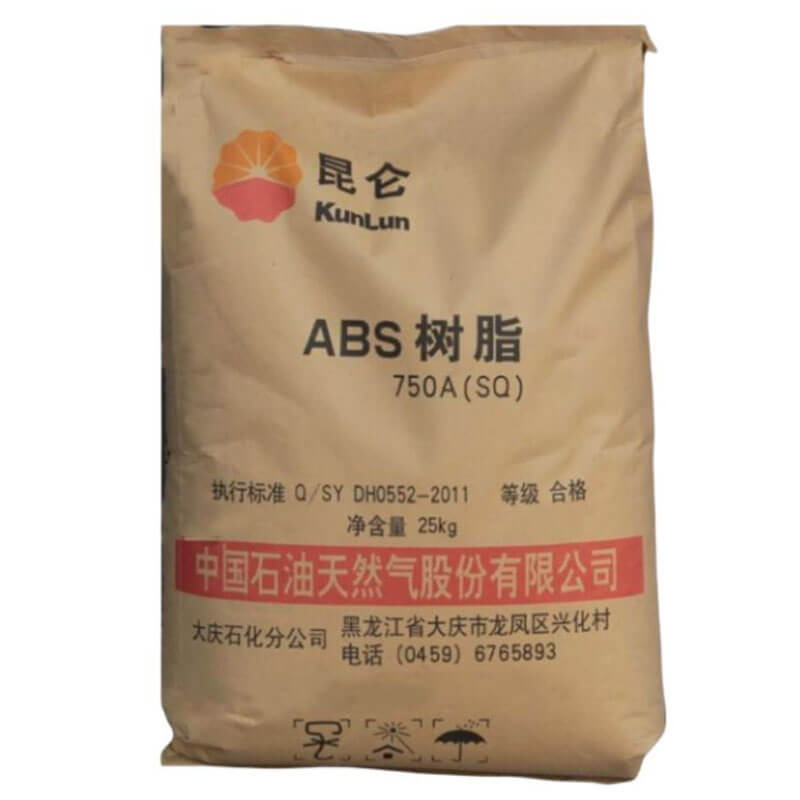
    • Product Name: Acrylonitrile‑Butadiene‑Styrene Resin ABS‑750A(SQ)
    • Factroy Site: Xinghua Village, Longfeng District, Daqing City, Heilongjiang Province
    • Price Inquiry: sales6@ascent-chem.com
    • Manufacturer: PetroChina Daqing Petrochemical Company
    • CONTACT NOW
    Specifications
    HS Code 841506
    Density 1.05 g/cm³
    Melt Flow Rate 220c 10kg 16 g/10 min
    Mold Shrinkage 0.4-0.6 %
    Tensile Strength At Yield 48 MPa
    Elongation At Break 15 %
    Flexural Strength 65 MPa
    Flexural Modulus 2200 MPa
    Izod Impact Notched 23c 24 kJ/m²
    Rockwell Hardness R-110
    Heat Deflection Temperature 1 82 Mpa 88 °C
    Vicat Softening Temperature 50n 100 °C

    As an accredited Acrylonitrile‑Butadiene‑Styrene Resin ABS‑750A(SQ) factory, we enforce strict quality protocols—every batch undergoes rigorous testing to ensure consistent efficacy and safety standards.

    Packing & Storage
    Packing Acrylonitrile‑Butadiene‑Styrene Resin ABS‑750A(SQ) is packaged in 25 kg sealed polyethylene-lined bags, with 40 bags per pallet.
    Container Loading (20′ FCL) 20’ FCL: ABS-750A(SQ) resin packed in 25kg bags on pallets, shrink-wrapped and securely stowed for safe, efficient container loading.
    Shipping Acrylonitrile‑Butadiene‑Styrene Resin ABS‑750A(SQ) ships as non-hazardous plastic granules. It should be packed in sealed polyethylene-lined bags, fiber drums, or bulk containers to prevent moisture uptake and contamination. Keep away from ignition sources and strong oxidizers; avoid dust generation. No special transport classification is required under normal conditions.
    Storage Store Acrylonitrile‑Butadiene‑Styrene Resin ABS‑750A(SQ) in a cool, dry, well‑ventilated area away from direct sunlight, heat, and open flames. Keep original containers tightly sealed to prevent moisture pickup and contamination. Avoid creating dust clouds; maintain good housekeeping to minimize accumulation. Storage temperatures should remain moderate, ideally below 50°C, to preserve material properties and ensure safe handling.
    Shelf Life Shelf life is typically two years from manufacture when stored in original sealed packaging, away from heat, moisture, and sunlight.
    Application of Acrylonitrile‑Butadiene‑Styrene Resin ABS‑750A(SQ)

    In automotive interior trim carrier production, ABS-750A(SQ) is injection-moulded where the specification requires a balance between melt-flow length and impact resistance in components with wall sections of 2.0–2.5 mm. Compliance is defined by ISO 3795 burning-rate classification, and, for passenger cabin parts, by VDA 278:2011 VOC and FOG limits; substance restrictions are screened against REACH EC 1907/2006 Annex XVII. Each lot is verified for melt volume-flow rate under ISO 1133-1:2022; deviation beyond supplier tolerance shifts thin-rib filling before gate freeze. The starting formulation is 100 phr ABS-750A(SQ), 0.15–0.30 phr hindered phenolic antioxidant, 0.20–0.40 phr internal lubricant, and 1.0–2.0 wt% carbon black masterbatch. Amine-based antistatic packages are not introduced because they can disrupt the phenolic stabilizer system and reduce thermal stability at processing temperatures. Pre-drying in a desiccant hopper at 80–90 °C with a -30 °C dew point is required to hold residual moisture below 0.05 wt%; inadequate drying produces silver streaks and weld-line brittleness. The injection unit uses a reciprocating screw with 20:1 L/D and compression ratio 2.0:1, barrel profile 210–230 °C, mould temperature 50–70 °C, fill time 1.5–2.5 s, and holding pressure 60–80% of peak injection pressure. The principal process conflict is loss of weld-line impact strength when the flow-front temperature drops below 210 °C; multi-gated tools therefore require sequential valve gates or end-of-fill melt-temperature compensation. Terminal moulded articles include HVAC distributor housings, centre-console side carriers, door trim backing plates, and instrument cluster bezels.

    Why Do IEC 62368-1 Enclosure Designs with ABS-750A(SQ) Require a Fire-Risk Exemption Before Tooling Release?

    ABS-750A(SQ) is used for information-technology equipment enclosures only when the fire-risk assessment permits an ANSI/UL 94 HB resin; for live-part fire enclosures under IEC 62368-1:2023, ABS-750A(SQ) is not interchangeable with V-0 or V-1 flame-retardant grades. Material compliance is maintained against RoHS 2011/65/EU Annex II and the REACH EC 1907/2006 SVHC candidate list. The formulation is 100 phr ABS-750A(SQ), 2.0–3.0 wt% titanium dioxide masterbatch for light-tone covers, 0.1–0.2 phr antioxidant, and 0.5–1.5 wt% antistatic masterbatch only where surface resistivity regulation requires 1010–1012 Ω. At wall sections of 1.2 mm, cavitation density changes materially: flow hesitation at rib intersections produces gas traps and short shots if the melt temperature at the nozzle is below 220 °C. The barrel is maintained at 220–240 °C and the mould at 45–60 °C. Direct hot runners with 0.8 mm valve gates are employed, but residence time above 240 °C is held below 5 min to avoid yellow shift and surface bloom. Terminal moulded parts include router top and bottom housings, set-top box front bezels, access-point enclosures, and small distribution junction boxes.

    Floor-care appliance housings moulded from ABS-750A(SQ) are constrained by IEC 60335-1:2015 for household appliance safety; ABS-750A(SQ) is not positioned as the flame-retardant substitute for parts adjacent to current-carrying connections that must satisfy glow-wire ignition criteria. The formulation for floor-care structural parts is 100 phr ABS-750A(SQ), 2.0–4.0 wt% polymer colour masterbatch, 0.1–0.3 phr calcium stearate mould release, and 0.1–0.2 phr antioxidant. In thin-wall sections of 1.2–1.5 mm, barrel temperature is maintained at 230–250 °C and mould temperature at 40–60 °C; gas-assisted injection is applied in handle and rim sections to reduce sink marks at lower pack pressure. Holding pressure is limited to 55–65% of peak injection pressure to prevent gate over-packing, and cycle time is kept within 18–30 s depending on nominal wall thickness. Terminal moulded goods include vacuum cleaner main body halves, dust cup assemblies, brushroll housing components, and handle structural supports.

    Electroplating Adhesion through Chromic Acid Etching of ABS-750A(SQ)

    Electroplating of ABS-750A(SQ) is a narrow-window process because adhesion is generated by selective oxidation of dispersed butadiene domains before the metallic layer stack is applied. The applicable coating specification is ISO 4525:2003 for electroplated nickel-plus-chromium on plastics; thermal-cycling acceptance follows ASTM B604 with no blistering after 10 cycles from -40 °C to 85 °C. Formulation control begins before moulding: electroplating-grade ABS traditionally requires a butadiene rubber content near 10–16 wt%, and the lot-specific rubber-phase distribution in ABS-750A(SQ) must be verified on the supplier certificate before etch-bath qualification; if dispersed rubber content falls below 10 wt%, the etch-site density is insufficient for stable peel adhesion. Regrind above 20 wt% is not permitted because prior heat history changes surface oxidation and etch uniformity. Substrate moulding uses wall thickness 2.5–3.0 mm, mould temperature 50–70 °C, and a packing profile that avoids high gate shear, because pre-stressed mould surfaces produce microcracks after etching. The etch bath is maintained at 400 g/L chromic acid equivalent and 380–420 g/L sulfuric acid, bath temperature 65–70 °C, dwell 6–12 min. Under-etching below 6 min leaves a low-wettability surface without a mechanical key; over-etching beyond 12 min widens pores to the point of reduced cohesive strength. After neutralisation and hot-water rinses, sensitisation is carried out with a Pd/Sn colloid at 30–40 °C, followed by acceleration and electroless nickel at 0.2–0.3 μm. The electrolytic sequence is copper 15–25 μm, semi-bright nickel 8–12 μm, bright nickel 5–10 μm, and chromium 0.25–0.5 μm. Terminal plated articles include automotive grille trim, door-handle inserts, decorative mouldings, faucet-handle bezels, and cosmetic closures.

    Electroplated layer stack and measurement standard for ABS-750A(SQ) substrates
    Metallic layerThickness rangeMeasurement method
    Electroless nickel0.2–0.3 μmISO 2177:2003 coulometric
    Electrolytic copper15–25 μmISO 2177:2003 coulometric
    Semi-bright nickel8–12 μmISO 2177:2003 coulometric
    Bright nickel5–10 μmISO 2177:2003 coulometric
    Chromium0.25–0.5 μmISO 2177:2003 coulometric

    When ABS-750A(SQ) Is Compounded with 5–8 wt% Butadiene-Rich Modifier for Toy and Sports Housing Applications

    Compounding of ABS-750A(SQ) into toy and sports accessory housings is used where the original grade’s high melt flow is retained but cold-impact fracture must be reduced. Compliance is maintained with EN 71-3:2019+A1:2021 migration limits and CPSIA Section 108 lead content 100 mg/kg maximum and regulated phthalates 0.1% each. The compounding formulation is 100 phr ABS-750A(SQ), 5–8 phr butadiene-rich impact modifier, 1.5–3.0 wt% colour masterbatch, and 0.1–0.2 phr antioxidant. Notched Izod impact of the modified compound is checked according to ISO 180 before moulding release. Melt blending is conducted in a co-rotating twin-screw extruder at L/D 36:1, barrel temperature 200–220 °C, screw speed 400–600 rpm, and vacuum venting at -0.08 MPa; the compounded pellet is dried again to <0.05 wt% moisture before injection moulding. Moulding uses wall thickness 2.0–3.0 mm, melt temperature 210–230 °C, mould temperature 50–60 °C, and post-mould annealing at 70 °C for 2 h to relieve frozen-in stress. Terminal parts include construction toy brick assemblies, board game tokens, action figure structural components, and sports helmet visor shells.

    Laboratory instrument covers moulded from ABS-750A(SQ) are specified for benchtop equipment where no patient contact occurs and the housing must remain dimensionally stable under intermittent use. Compliance is evaluated under IEC 61010-1:2017 for laboratory equipment safety, RoHS 2011/65/EU Annex II, and REACH EC 1907/2006 substance restrictions. The formulation is 100 phr ABS-750A(SQ), 1.0–2.0 wt% white masterbatch, 0.1–0.2 phr antioxidant, and no external mould release when the cover is to be pad-printed or adhesive-labelled. Processing uses wall thickness 2.0–2.5 mm, barrel temperature 210–230 °C, and mould temperature 50–65 °C; hot-runner thermal uniformity is maintained to avoid streaking on white surfaces. Published data for this specific configuration is limited, so pilot tools are recommended before high-volume transfer. Terminal parts include benchtop analyser covers, spectrophotometer bezels, lateral flow reader housings, and laboratory power supply shells.

    Free Quote

    Competitive Acrylonitrile‑Butadiene‑Styrene Resin ABS‑750A(SQ) prices that fit your budget—flexible terms and customized quotes for every order.

    For samples, pricing, or more information, please contact us at +8618018036652 or mail to sales6@ascent-chem.com.

    We will respond to you as soon as possible.

    Tel: +8618018036652

    Email: sales6@ascent-chem.com

    Inquiry

    Get Free Quote of PetroChina Daqing Petrochemical Company

    Flexible payment, competitive price, premium service - Inquire now!

    Certification & Compliance
    More Introduction

    Acrylonitrile‑butadiene‑styrene resin ABS‑750A(SQ) is a medium-flow, general-purpose ABS injection‑moulding grade in which a grafted polybutadiene rubber phase is dispersed in a continuous styrene‑acrylonitrile copolymer matrix. The polybutadiene phase provides impact energy absorption through rubber cavitation and shear yielding, while the SAN matrix contributes tensile stiffness, surface hardness, and chemical resistance. The base polymer architecture is suitable for rigid moulded articles where dimensional stability, surface appearance, and moderate impact resistance are required. The (SQ) suffix identifies a stabilizer and batch‑consistency package applied to the base ABS‑750A grade; published data for this exact suffix is limited, and downstream process settings are therefore referenced to the base grade while the supplier’s batch certificate remains the governing specification. The grade is not a high-flow or high-impact speciality, but a controlled general-purpose material with broad applicability in appliance, automotive, electrical, and electroplating markets. Representative properties for ABS‑750A(SQ) are consolidated in Table 1. The property ranges are class‑typical for medium‑flow ABS rather than batch‑specific values: 1.03–1.06 g/cm³ density (ISO 1183‑1), 41–52 MPa tensile stress at yield (ISO 527‑2), 2,100–2,800 MPa flexural modulus (ISO 178), and 18–30 kJ/m² Charpy notched impact strength (ISO 179/1eA). The melt volume-flow rate measured at 220 °C with 10 kg load is generally in the 2–6 cm³/10 min range, placing the material in the medium-flow segment for injection moulding.

    Representative property window for ABS‑750A(SQ)
    Property Test standard Typical range
    Density ISO 1183‑1 1.03–1.06 g/cm³
    Melt volume-flow rate (220 °C/10 kg) ISO 1133‑1:2022 2–6 cm³/10 min
    Tensile stress at yield ISO 527‑2 41–52 MPa
    Flexural modulus ISO 178 2,100–2,800 MPa
    Charpy notched impact strength (23 °C) ISO 179/1eA 18–30 kJ/m²
    Heat deflection temperature (1.82 MPa) ISO 75‑2 80–95 °C
    Vicat softening temperature (50 N, 50 °C/h) ISO 306 95–105 °C

    How do drying and melt-temperature boundaries affect ABS‑750A(SQ) during production-scale injection moulding?

    Moisture uptake is the first process constraint. ABS granules stored above 60% relative humidity can absorb more than 0.2 wt% water. Injection moulding of ABS‑750A(SQ) requires a maximum moisture content of 0.05 wt%, measured by Karl Fischer titration. Pre‑drying in a closed‑loop desiccant-wheel dryer at 80–85 °C for 2–4 h is mandatory when packaging has been opened for more than 1 h. The air dew point should be maintained at −30 °C to −40 °C. Inadequate drying produces splay, silver streaks, and reduced weld-line strength; on production-scale injection machines with general-purpose screws of 20:1 to 25:1 L/D ratio, moisture-related defects typically appear first at the gate and along low-velocity weld lines. The dryer hopper residence time should not exceed 4 h at 85 °C; longer exposure to hot dry air increases thermal yellowing through polybutadiene-phase oxidation. The hopper throat temperature should be kept below 85 °C, and closed-loop pneumatic conveying with dry-air dew point below −30 °C is recommended to prevent re‑moisture pickup and static accumulation.

    The melt-temperature window is 200–240 °C measured at the nozzle. Barrel profiles are typically set from rear to nozzle at 180–210 °C, 210–230 °C, 220–240 °C, and nozzle at 220–240 °C. Residence time above 240 °C should not exceed 5 min; longer hold-up causes polybutadiene-phase oxidation and SAN yellowing. When interruptions exceed 5 min, the barrel should be purged with a heat-stable SAN or general-purpose PS. Mould temperature is held between 40–70 °C. At the lower boundary, flow marks and weld-line notch sensitivity increase because the skin freezes before pack pressure consolidates the weld line. At the upper boundary, cycle time increases and post-mould shrinkage may reach 0.6–0.7% (ISO 294‑4).

    The screw and barrel configuration for ABS‑750A(SQ) requires a compression ratio of 2.0:1 to 2.5:1, shot capacity between 30% and 70% of barrel volume, and a melt cushion of 3–6 mm. Check-ring clearance should be maintained at 0.05–0.15 mm; excessive clearance causes melt back-flow and cavity-to-cavity inconsistency. Injection speed and shear rate are bounded. Medium-flow ABS exhibits shear thinning; at a melt temperature of 230 °C, class-typical apparent viscosity is approximately 800 Pa·s at 100 s⁻¹ and 80 Pa·s at 1,000 s⁻¹ in capillary rheometry. High shear rates above 50,000 s⁻¹ in gates have been associated with rubber-particle orientation and surface haze. Hydraulic injection pressure is typically 70–140 MPa, and hold pressure is selected at 50–80% of the peak injection pressure. Clamp force of 0.4–0.6 tonne per square centimetre of projected area is usually sufficient for unfilled ABS. For multi-cavity tools, runner balancing should maintain inter-cavity pressure variation below 5% because ABS‑750A(SQ) has a narrow cavity-to-cavity impact retention window compared with high-flow grades. Gate design for unfilled ABS parts commonly uses tab or submarine gates with diameter 0.6–0.8 mm for small parts, or edge gates with land length 0.5–1.0 mm; gate freeze-off time controls the point at which cavity pressure stops rising during the hold stage.

    Drying and melt-temperature conflicts become sharper in hot-runner tools with long residence times. For hot-runner manifolds with internal runners, the melt should be maintained below 240 °C and the hot-runner nozzle tips should be individually controlled to avoid overheating at the gate. If the manifold is set above 240 °C, yellowing and black specks can appear after 10–15 min of hold time; purging with a heat-stable SAN at the same temperature is required. Mould venting is another interacting boundary: ABS‑750A(SQ) can generate gas from residual moisture or additive decomposition, so vents should be ground to 0.01–0.03 mm depth. Insufficient venting causes burn marks at the end of fill and short shots at the edge of the cavity.

    Differentiation from high-flow ABS is governed by the melt-flow index and the resulting mould-filling boundary. ABS‑750A(SQ) with MVR 2–6 cm³/10 min (ISO 1133‑1:2022, 220 °C/10 kg) has higher viscosity than high-flow ABS grades with MVR above 20 cm³/10 min. Thin-wall sections below 1.0 mm nominal thickness may short-shot unless gate land lengths are shortened or the flow-length-to-thickness ratio is reduced; published data for this specific configuration is limited. Conversely, the lower flow tends to reduce frozen-in orientation and internal stress, which improves electroplating etch uniformity relative to high-flow ABS. High-flow grades used in thin-wall electronic enclosures often sacrifice notched impact strength, with class-typical Charpy values of 10–20 kJ/m² (ISO 179/1eA), while ABS‑750A(SQ) retains 18–30 kJ/m². The difference is most visible at wall thickness below 1.2 mm, where high-flow ABS may fill a serpentine flow path at lower pressure but exhibits lower weld-line strength and higher moulded-in stress.

    Differentiation from high-impact ABS is caused by rubber content and rubber-particle size distribution. High-impact ABS grades can reach Charpy notched impact strengths above 30 kJ/m², but their flexural modulus typically falls below 1,800 MPa. ABS‑750A(SQ) maintains flexural modulus above 2,100 MPa, which is relevant for brackets, appliance housings, and structural enclosures where creep under load is a constraint. Heat-resistant ABS grades with HDT at 1.82 MPa above 95 °C use higher SAN acrylonitrile content or α-methylstyrene comonomer; those grades generally exhibit lower flow and lower impact than ABS‑750A(SQ). Compared with ABS‑polycarbonate blends, ABS‑750A(SQ) has lower HDT and notched impact but can be processed at lower melt temperatures and with less drying sensitivity; however, published data for this specific configuration is limited. The comparative ranges are shown in Table 2.

    Class-level comparison for medium-flow ABS, high-flow ABS, high-impact ABS, and heat-resistant ABS
    Property Test standard ABS‑750A(SQ) class High-flow ABS class High-impact ABS class Heat-resistant ABS class
    Melt volume-flow rate ISO 1133‑1:2022 2–6 cm³/10 min 20–40 cm³/10 min 3–8 cm³/10 min 1–4 cm³/10 min
    Charpy notched impact strength (23 °C) ISO 179/1eA 18–30 kJ/m² 10–20 kJ/m² 30–45 kJ/m² 12–22 kJ/m²
    Flexural modulus ISO 178 2,100–2,800 MPa 1,800–2,400 MPa 1,500–1,900 MPa 2,000–2,600 MPa
    Heat deflection temperature (1.82 MPa) ISO 75‑2 80–95 °C 75–90 °C 80–95 °C 95–110 °C

    Flame-retardant ABS grades are not direct replacements for ABS‑750A(SQ) because phosphorus or brominated systems alter heat stability and require lower melt temperatures; ABS‑750A(SQ) is generally classified UL 94 HB at 3.0 mm, but final colour and thickness affect classification and require independent certification. Transparent ABS grades have a different rubber morphology and should not be assumed to have the same etch behaviour or weld-line strength. Glass-fibre-reinforced ABS grades have higher tensile modulus above 4,000 MPa, but fibre orientation causes anisotropic shrinkage and poor electroplating surface.

    When ABS‑750A(SQ) replaces general-purpose ABS in electroplating and high-gloss moulded parts

    ABS‑750A(SQ) is specified for electroplating substrates, appliance fascias, mirror housings, automotive interior trim, furniture edge trim, and office equipment covers. For electroplating, the ABS surface is etched in a chromic acid‑sulphuric acid bath at 60–70 °C for 3–10 min to oxidize and remove the polybutadiene phase. The etch creates micro-anchoring sites, and the grafted SAN matrix remains to provide adhesion to electroless nickel. Mould temperature should be kept at 60–80 °C for plated parts, even though this is above the normal ABS mould-temperature range, because low mould temperature produces surface orientation and variable etch depth. Butadiene content, rubber particle size, and the (SQ) stabilizer package determine etch uniformity; if butadiene content is below approximately 15 wt%, skip plating and blistering are observed. When butadiene content exceeds approximately 20 wt%, surface hardness and rigidity fall. Published data for this specific suffix is limited, so electroplating trials should be run before tool commissioning. Electroplated parts are generally tested for adhesion using a thermal cycling protocol and for coating thickness by ISO 2177 or ASTM B568; cross-cut adhesion testing may be referenced to ISO 2409, but the applicability to electroplated ABS is limited.

    High-gloss moulded parts benefit from mould surfaces with SPI A1/A2 polish and melt temperature near 230 °C. Gloss retention is sensitive to moisture and regrind. For appearance-critical parts, regrind addition is usually limited to 10–20 wt%; for electroplated parts, regrind is avoided because oxidized butadiene changes etch uniformity. The grade should not be dried above 85 °C for extended periods beyond 4 h because yellowing can occur. Storage should avoid aromatic solvents, ketones, and esters because these cause environmental stress cracking in ABS. Outdoor weathering is a limitation: unplated ABS has limited UV resistance and surface embrittlement occurs under prolonged exposure; UV-stabilized grades or cap layers are required for exterior use. If the moulded parts are intended for automotive interior use, volatile organic compound emissions should be validated by VDA 277 or VDA 278; published data for this specific suffix is limited and a grade-specific emission test is required before release.

    On production lines, the main process conflict is between electroplating surface quality and cycle time. Higher mould temperature (60–80 °C) improves adhesion but increases cooling time; lower mould temperature (40–50 °C) improves cycle time but raises the risk of low gloss and etched-surface striations. The practical balance for ABS‑750A(SQ) is placed at a mould temperature near 50–65 °C for non‑plated high-gloss parts and 70–80 °C for plated parts. When hot-runner systems are used, gate cooling and valve-pin control should be adjusted to maintain a gate shear rate below 50,000 s⁻¹ to prevent splay and rubber-phase denaturation. Direct melt blending with polyamide without compatibilizer is not recommended because phase separation produces gross delamination and surface defects. Compliance with RoHS Recast 2011/65/EU and REACH EC 1907/2006 SVHC restrictions must be verified against the supplier’s batch certificate, because the (SQ) additive package can affect declaration status. Food-contact use requires grade-specific confirmation against FDA 21 CFR 177.1020 and EU 10/2011; not all ABS grades meet the same migration limits.